
Bethesda becomes one of four hospitals in the province to get specialized device to help patients breathe, swallow
Advertisement
Bethesda Regional Health Centre is one of four hospitals in the province to have a specialized device that helps patients to breathe, swallow and prevent illness.
On Tuesday, speech and language pathologist (SLP) Camryn Turton demonstrated the device and said it was a “game changer.”
“This is a total game changer (at Bethesda) and it makes me excited for the future,” she said.
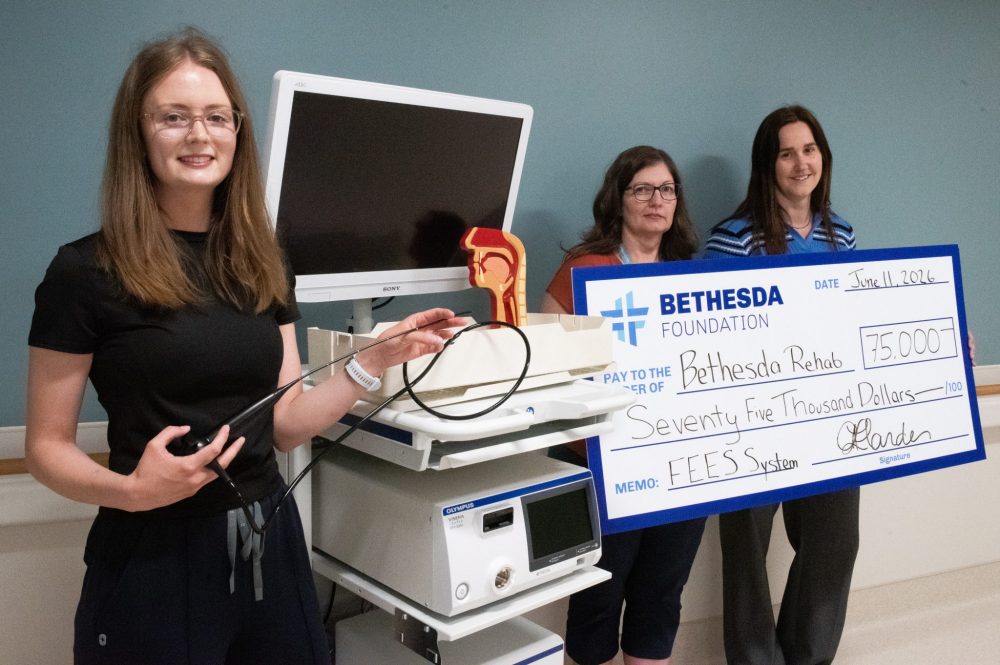
The FEES System, fiberoptic endoscopic evaluation of swallowing system, is the gold standard along with fluoroscopy. FEES uses an endoscope that is about five millimetres wide with a camera and light at the tip, to enter the throat through the patient’s nose stopping at the vocal cords, to see how the patient swallows. The procedure is done with patients who have difficulty swallowing or breathing due to illness, injury, or weak throat muscles.
“Dysphagia (difficulty swallowing) is so common in so many different populations,” said Turton. “It’s so common in the natural aging process or in neurodegenerative conditions or strokes, Parkinson’s. But it’s just a life function, at the end of the day, we need to swallow to live because we need food in our stomachs. So, it’s something we don’t really think of until it’s gone.”
FEES can also be used to detect if the patient’s swallowing is contributing to food or liquid entering their lungs, which could lead to aspirational pneumonia.
The FEES procedure takes about 10 to 15 minutes and feels like a tickle.
“So, there’s a lot of really intricate movements in there and we get to watch it in real time and we’re recording it in real time so I can go back and really analyze it frame by frame,” said Turton. “I can just dip down and look for little tiny bits of residue, things like that. Because the food will be dyed green, like a bright green, so you can really see it in there.”
Once the cause of the choking is found, a referral to an ear, nose, throat specialist can be made or exercises can be recommended by a SLP.
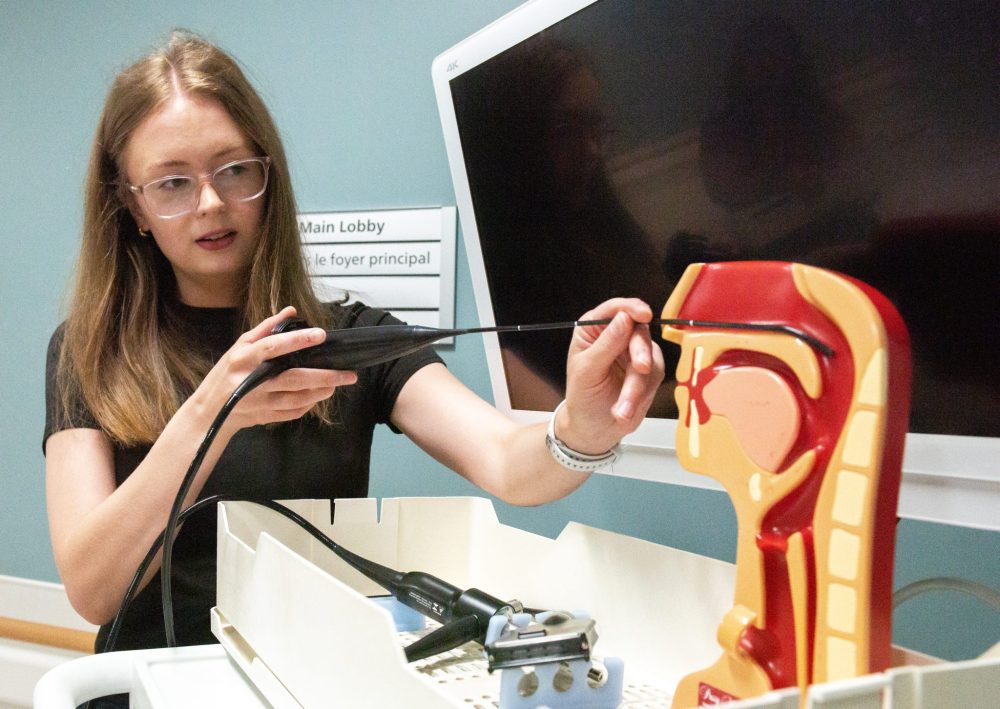
Rehabilitation services has been asking for the endoscope for eight years and received the first scope in January, but the devices have not been used on patients yet as Turton and the other SLP need to be fully trained and certified with a set number of hours first.
Before receiving the FEES system, the alternative was to send patients to the hospital in Portage la Prairie or Winkler for a fluoroscopy, where the patient swallows radioactive modified barium (MBS) and doctors see the swallow through x-rays. With FEES there is no barium involved and the procedure can be performed at the patient’s bedside with food being used to track the swallow. There is currently a waitlist for the FEES system.
Only four patients can be screened with FEES per day as the two devices need to be cleaned prior to each use, which can take hours for each endoscope, according to rehabilitation services manager Diane Reimer. Prior to FEES one patient would be evaluated per month by a SLP.
The only other locations in the province using FEES are Prairie Mountain Health Region and Winnipeg’s Riverview Health Centre and Health Sciences Centre.
The two endoscopes and FEES system were made possible by a $75,000 donation from the Bethesda Foundation. The equipment is delicate and replacing the endoscope alone costs $14,000.
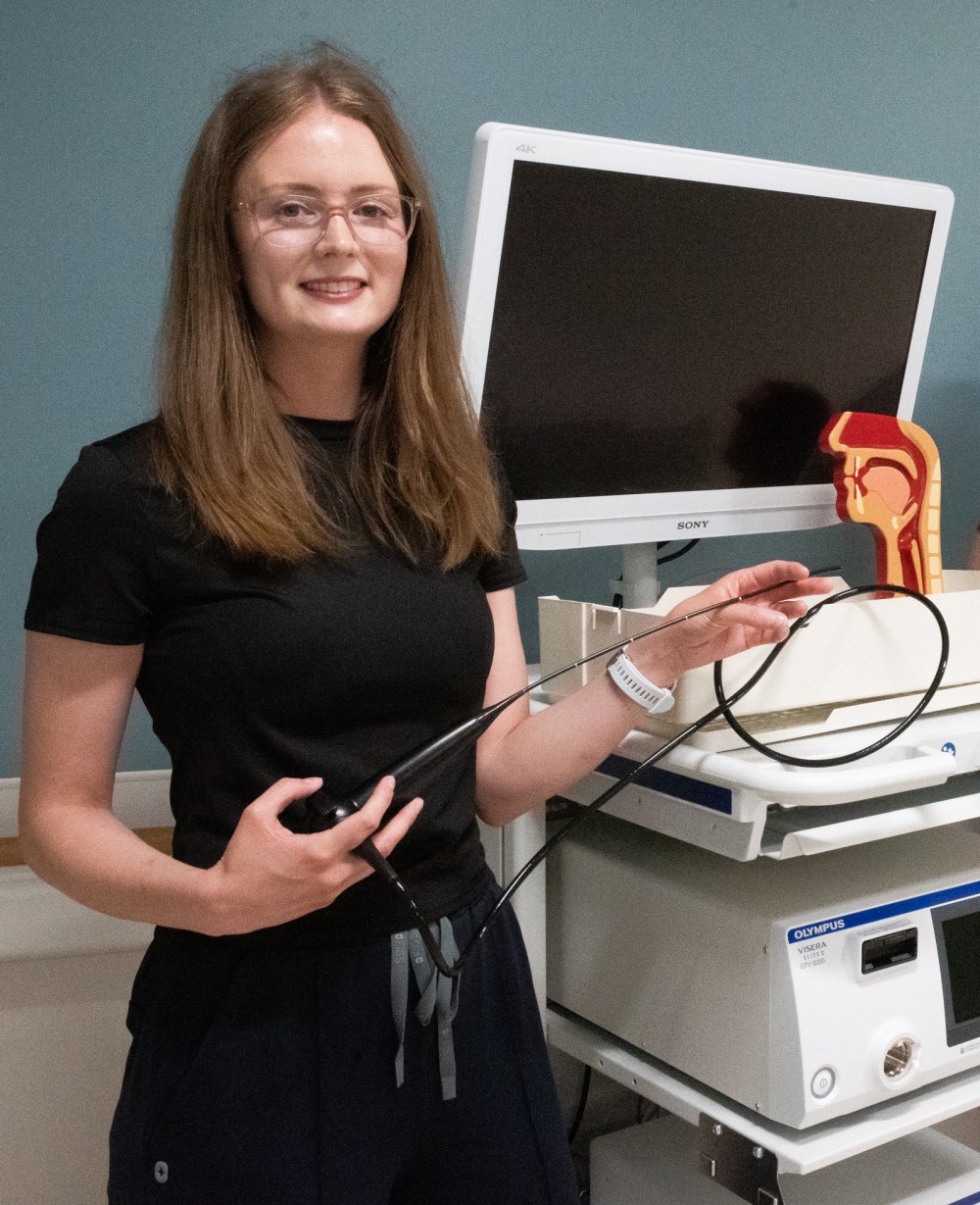
“Well, one of our goals is to enhance health care in the Bethesda region,” said foundation executive director Alisa Harder.
“So, I think it’s evident from their excitement how much this brings to the rehab unit and the hospital. And being able to keep people local and provide them with services they did not previously have, I think is invaluable, and it’s a huge priority for the foundation. So, this was very much money well spent from our perspective.”