
Hanover development plan to promote density, affordable housing, industry
Advertisement
The RM of Hanover is looking to increase residential density and affordable housing with its new development plan and zoning bylaw as its projected population is set to increase by about 10,000 people by 2050.
The municipality held an open house on June 25 in Mitchell for residents to get information and ask questions about the changes the RM wants to make.
“In terms of the development plan, based on population projections, we’re redesignating some new lands adjacent to the LUDs for new residential, commercial, and industrial development,” said Jeff Plette, senior planner and partner with Landmark Planning and Design. “We’ve been working with the province to find policy provisions to allow for Hanover’s economy to diversify going forward.”
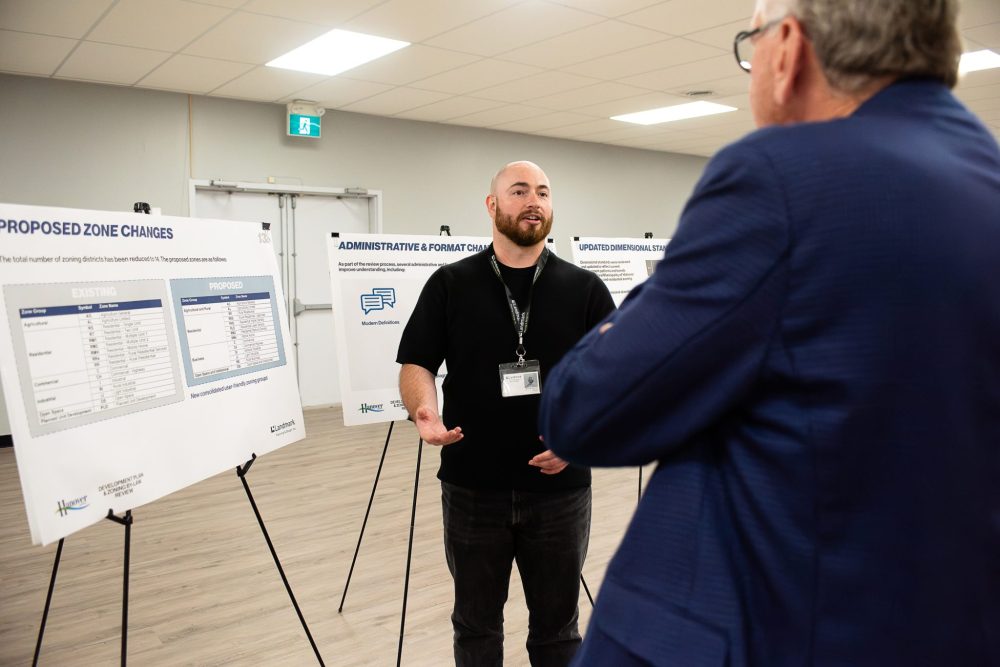
Landmark worked closely with council and the RM’s planning manager in developing the changes in the plan and zoning bylaw. The Planning Act dictates that municipalities must keep their development plans for future growth current, reviewed usually every five years, and their zoning bylaw consistently reviewed to keep in step with the development plan.
“In the zoning bylaw, we are tweaking some of the dimensional standards to allow for more housing types to be built in the LUDs to help speak to affordability of housing for residents, allowing for starter homes on smaller lots, (multi-family developments), to just help keep housing attainable for families,” said Plette.
Landmark’s projections were for 25 years into the future.
According to Landmark, Hanover’s population is currently estimated to be about 22,061 people based on the last census and municipal permit data. The five LUDs have grown between three and nine percent in 2025 with the most growth seen in New Bothwell, Kleefeld, and Blumenort. Conservative projections estimate Hanover will grow by an additional 9,925 residents by 2050 if current trends continue, though this number is likely to be even greater, according to Landmark planner Brennan Johnson.
While the open house was open for three hours, less than 10 people came to see how the changes will affect them.
Developer Waldo Neustaedter came to the open house to see what council’s plans are for higher density homes, such as townhomes or duplexes. Neustaedter has developed mixed housing in Kleefeld, Mitchell, Blumenort, and Steinbach.
“I think that they’ve really hit on some really good points here where they’re actually making a community that can probably handle a little bit more affordable housing, but also retain the integrity of the community and have kind of a country style, better green spaces, better provisions for the people to enjoy their lifestyle here,” he said.
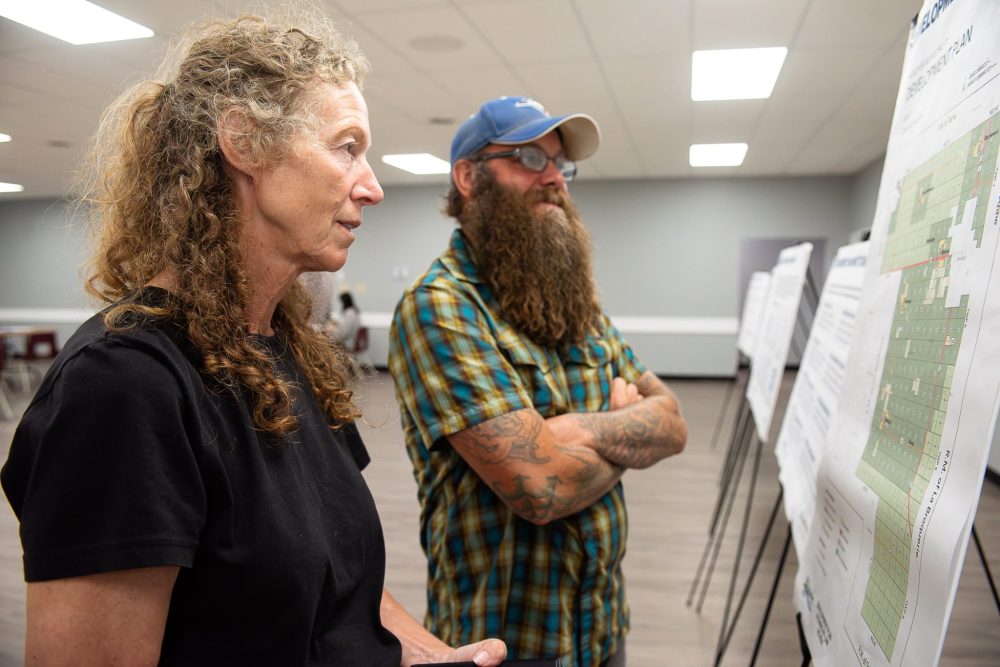
Kleefeld residents Cyndy Hoover and Bernie Doerksen thought there was a lack of infrastructure to accommodate more housing and that council should focus on existing needs first.
“People would like clean water,” said Hoover. “It does run brown. They say it’s drinkable, I wouldn’t drink it.”
“(There’s) not proper drainage. (Water) just sits on the streets and in the parks,” said Doerksen.
Hoover thought if council wanted more residential density in the LUDs with multi-family housing, then the RM should spread multi-family housing throughout the LUD and not concentrate it into a single neighbourhood. She also felt that the infrastructure needs to be in place to handle the increase in population.
Jen Klippenstein, also from Kleefeld, shared Hoover and Neufeld’s concerns regarding brown water and drainage. She also thought the streets and sidewalks should be paved while a new development is being built, rather than after the fact, for safety. Klippenstein shared the maintenance of streets should be a priority.
“I just feel like they need to make their communities better before they start doing more and growing faster,” she said.
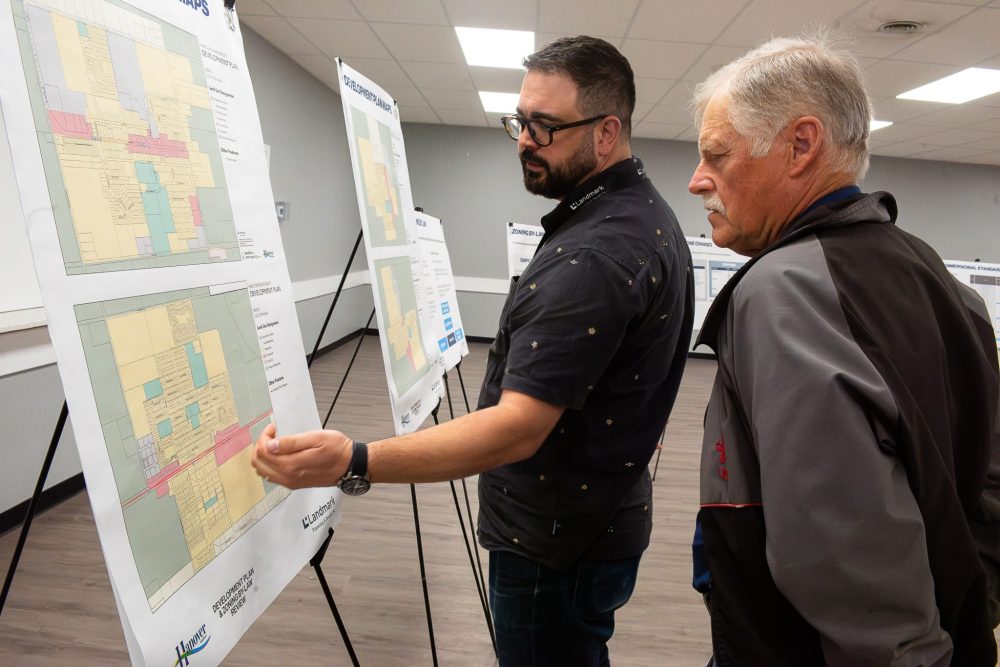
The development plan does not include specific infrastructure projects, rather it directs council to address infrastructure as an important service for urban development.
One of the infrastructure projects the RM is working on that will benefit residents in the future is the $235 million wastewater treatment plant that is currently under construction north of Niverville. It’s set to service 13 communities in six municipalities.
Johnson said the new plan builds on the previous plan’s residential aspects, while also allowing for provisions for commercial and industrial development, especially along major transportation networks near the LUDs.
“Larger scale commercial and industrial operations, there’s some really prime locations for that type of development and use that we just want to make sure that if there are opportunities or inquiries that Hanover is able to respond,” he said.
Types of commercial or industrial establishments that could be setting up shop in Hanover, according to Johnson, include agriculture adjacent and farm diversification businesses, business parks with warehousing and storage capabilities, and retail storefronts.
Mitchell resident Karolyn Rempel, a lawyer who works with subdivisions and development agreements, believes the RM is not open to new ideas. She said she has a business client that she wants to work with that wanted to build in the municipality off of a main highway, but was denied because council thought it would take away from the community aspect of the location.
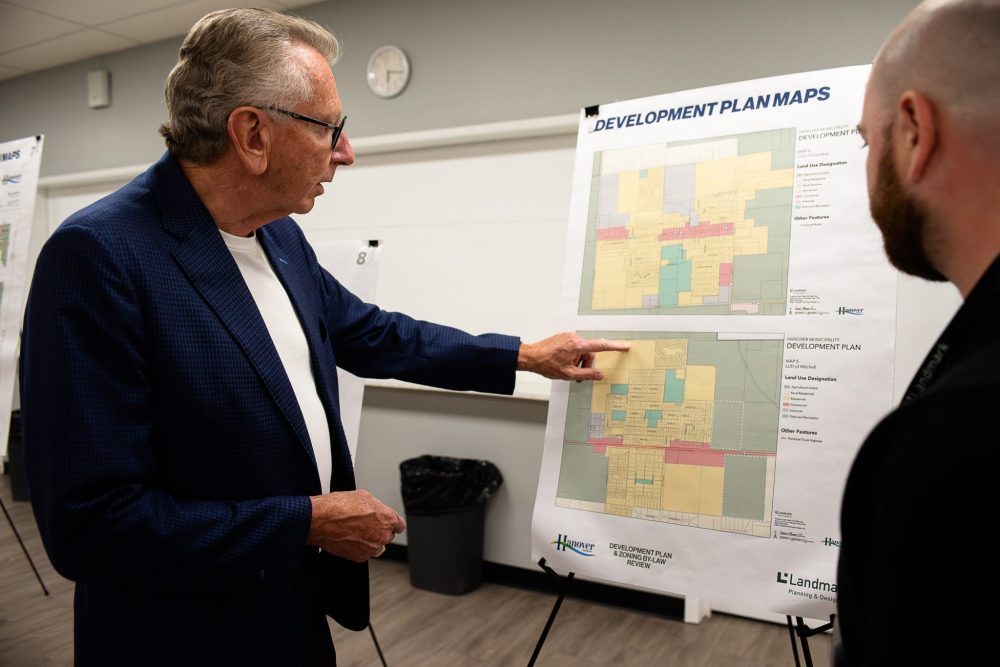
“Are people going to want to drive down a country road to get to this business?” she questioned. “But at the same time, they need the space so that if they do expand more, then they would have more room so they can buy more acreage here (than in) Winnipeg.”
Landmark estimates that very little agricultural land will be taken for expansion of the LUDs as the currently zoned “Future Growth Areas” in the RM will be used. Any changes of land designation from agriculture to non-agriculture will require consultation with Manitoba Agriculture.
The next steps for the development plan and the zoning bylaw is to send it to the province for review followed by a public hearing.