
‘It will hurt’: Trans Canada Trail funding to end in 2027
Advertisement
Federal funding for Trans Canada Trail will end next year, which could lead to difficulties for the Crow Wing Trail if its funding is not renewed.
The five-year grant will end in 2027 and Justin Fauteux, manager of communications for Trans Canada Trail, said negotiations are underway with the government to renew funding, though what that might look like is unknown.
“What we’re doing right now is really just making sure that everyone is aware that that’s the case. Currently as it stands, we don’t have that commitment (from the government), that renewal in place, so we’re really just working towards firming that up right now,” he said.
It costs Trans Canada Trail $11.4 million to operate annually and since 2022 it has received $55 million through Parks Canada. Funding covers programing to support trail development, community engagement, and long-term sustainability of the trail network. Since 1992, the federal government has invested about $145 million into the organization.
“Really, without this kind of steady (government) funding, what we’ll start to see is a lot of trails really kind of fall into disrepair to the point where they’re not usable anymore,” said Fauteaux, noting the organization will try to find ways to fund the trail networks, but perhaps with less grant money.
And while Trans Canada Trail is currently in talks with the federal government, the effect of a loss in funding will have an impact on the Southeast’s Crow Wing Trail.
“It’ll definitely hurt,” said Warren Britton, vice-president of the Crow Wing Trail Association. “We depend on the help and support the employees of Trans Canada Trail provide for us. Just a listening ear and providing advice stuff like that, connecting us with other organizations that may have experienced kind of the same problems. Which is just fantastic that they are able to do that. Without that it would be a lot harder for us to do what we do.”
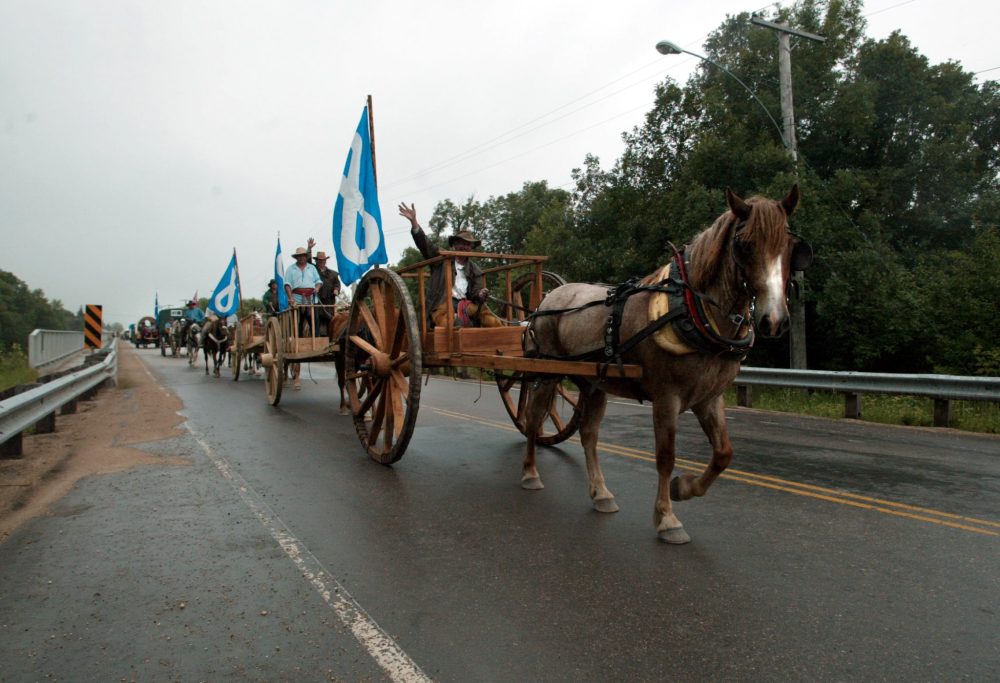
The Crow Wing Trail is the longest section of the Trans Canada Trail in Manitoba. At 200 kilometres, it connects Winnipeg to Emerson through the municipalities of Ritchot, Niverville, De Salaberry, St-Pierre-Jolys, and Emerson-Franklin. It closely follows the route of the Red River ox cart trail used in the mid-1800’s.
While Trans Canada Trail has invested $5 million into Manitoba trails since 1995, it has given $218,128 to the Crow Wing Trail Association for its various projects, most recently 2025’s trail clean-ups and the construction of a new trailhead with a rest area, green space, electric charging station, and interpretive storyboard panels depicting local Francophone and Metis history of the area.
“We get about $2,500 a year for spring clean-up on the trail, which goes a long way for us. Our budget is typically about $1,500 a year so that’s a nice chunk of change for us,” said Britton.
He noted money from Trans Canada Trail not only goes to help groups like the Crow Wing Trail Association, but others along the trail too.
“Niverville Communities in Bloom just submitted an application to get funding for a nice seating area along the trail here. It’s not just limited to Crow Wing (Trail Association) that has to do the work, but any other organization along the trail that wants to benefit the areas around the trail are fully able to do that.”
Britton said his group is small so fundraising would be difficult, but the association does get funding from Trails Manitoba, individual donors, and memberships.
Since 2022, Trans Canada Trail has also been expanding its corporate partnerships, building up its individual donor base, and is currently launching a fundraising campaign.
Fauteux said the investment from the government is not only important for development of the trails, but for attracting private donors.
“It’s kind of a chicken or the egg situation where the government funding really does act as a catalyst for private funding. And when those two are paired together, that’s when you really see a ton of success,” he said.
The origins of the Trans Canada Trail began in 1992 during Canada’s 125th anniversary when national unity was top of mind. Albertan Bill Pratt and Quebecer Pierre Camus came together with the idea of connecting the country through a trail system that stretched from the East Coast to the West Coast to the Arctic. The trails were finally connected into one 30,000 km network in 2017 for Canada’s 150th anniversary.
“It was a nice kind of bookend,” said Fauteaux. The trail is the world’s longest multi-use trail system in the world, according to Trans Canada Trail.
Trans Canada Trail has launched a lobbying campaign asking Canadians to write to their member of parliament in support of the non-profit. Supporters should visit notjustatrail.ca to get more information.
“The biggest thing people can do for us is really make their voices heard…let the government know that this is something that’s important to the community and deserves to continue (with) federal support,” said Fauteaux.
Trans Canada Trail will know whether they will receive funding when the government announces its budget in the fall.