
1946 – 2026 Watching Steinbach Grow: Remembering the past, building for the future
Advertisement
While Steinbach was constantly building for the future, it was also remembering the past, and along with the village expanding to a town and then to a city, the Mennonite Heritage Village (MHV) preserved a chunk of history that was the Mennonite foundation of the community.
The 1967 centennial project of Manitoba’s Mennonites received the official approval of the Manitoba government, when the chairman of the Manitoba Centennial Corporation told the 250 attending Steinbach’s 1965 Chamber of Commerce banquet, the project ranked first in centennial projects in rural Manitoba.
Although there never had been any doubt that the museum project would be accepted, J.J. Reimer, head of the Manitoba Mennonite Historical Society, said Maitland B. Steinkopf’s public announcement had cleared the last hurdle and his group would be able to swing into action.
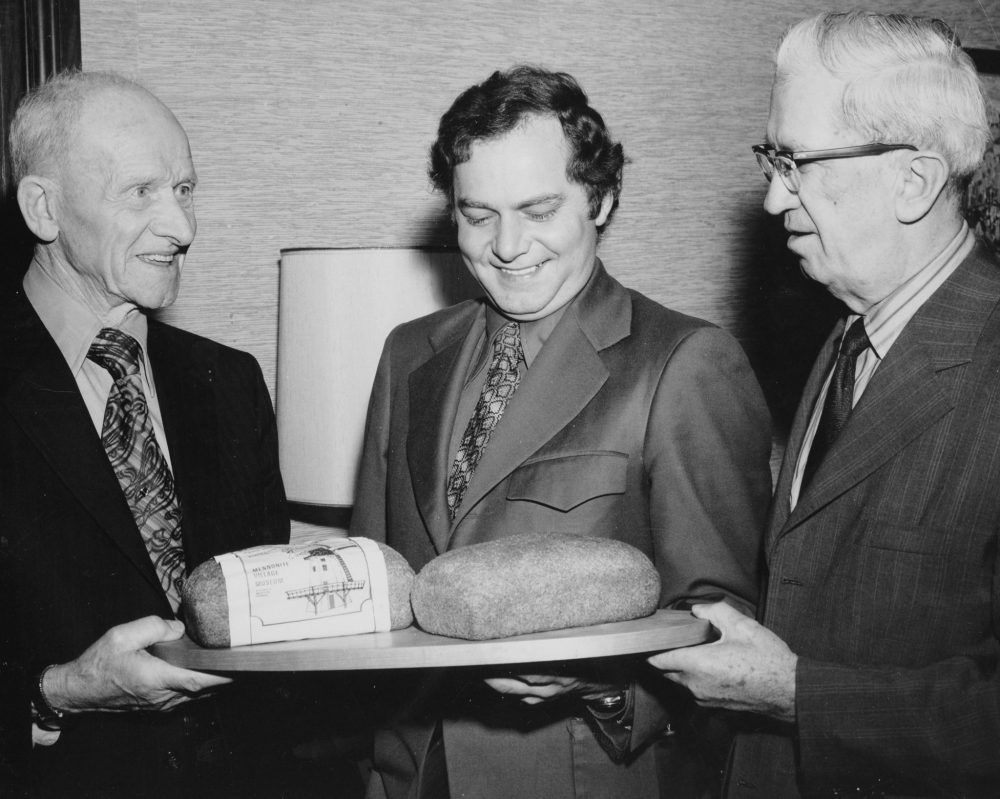
Guests at the 1965 banquet each received a colourfully printed brochure with the complete details about the purposes and possibilities of the $250,000 Mennonite Village Museum. The brochures carried an artist’s conception of an aerial view of the completed village.
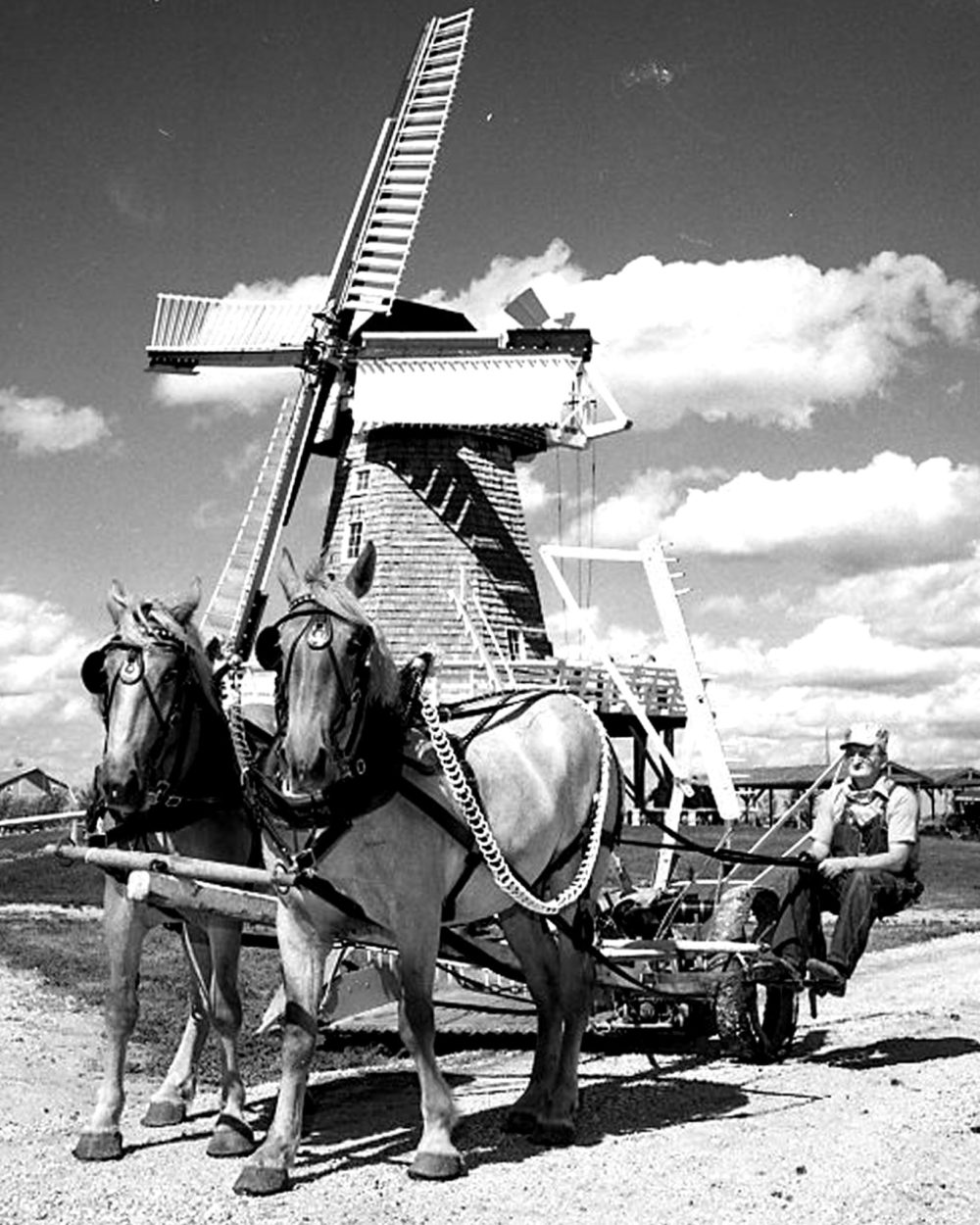
The 1967 centennial project that launched the MHV was the first of a number of local centennial projects at the site. A full-sized, completely-operational grist mill was constructed in time for Steinbach’s centennial in 1974. The project was aided by provincial funding announced during Manitoba’s centennial in 1970.
It has often been said, when a politician is fighting against insurmountable odds, he is “tilting at windmills” and for Manitoba’s NDP Premier Ed Schreyer, the working grist mill on the grounds at MHV must have been a constant reminder of the fate his party suffered in Steinbach at election time.
But politics aside, to his credit, Schreyer always took a special interest in the windmill project at the museum, and his numerous visits to Steinbach always included a side trip to the museum grounds, and on occasion, he brought a provincial cheque with him.
It was at a meeting with the Steinbach Chamber of Commerce in 1970 that all party differences were forgotten, and Ed Schreyer announced a substantial government grant destined for development of the Mennonite museum in Steinbach.
The premier took no offence to a couple of jibes directed his way by local MLA L. A. Barkman and got in a few comments of his own regarding the Liberal MLA’s support of the NDP.
“As long as your MLA keeps voting on my side, you people have no problem here,” quipped Schreyer, in reply to one of Barkman’s comments.
Schreyer said his government was extremely enthusiastic about the museum project and felt they should participate financially. The premier indicated he could not be specific about the amount of the grant at this early stage of the project, but said it would be in excess of $25,000 and probably closer to $50,000.
The government support promised by Premier Schreyer did not take long to materialize and he was back in Steinbach in February of 1971 with a cheque for $17,000 as the provincial government’s first contribution.
“The development of your museum and restored Mennonite village at Steinbach will be a source of pride for all Manitobans, and is a project the government is pleased to be able to support.”
But that wasn’t to be the end of the story, for at official opening ceremonies for the windmill in October of 1972, Schreyer praised the Town of Steinbach, the RM of Hanover and the Manitoba Mennonite Historical Society for their support of the project and promised further funds from the province.
A month after the opening, the mill construction fund got another boost from the province, with the arrival of a cheque for $33,000, which represented the second installment of funds promised by Schreyer, two years earlier.
At the time, museum president J.J. Reimer said the grant would go into general revenues, although the mill had been the project for which government assistance had been requested.
“With this last $33,000, the mill, estimated to cost $100,000, will be 90 percent paid for.”
At the same time, Steinbach council, which had earlier provided a grant of $8,000, added another $9,500 to the museum fund. An additional $500 grant was also provided to the museum by the RM of Hanover.
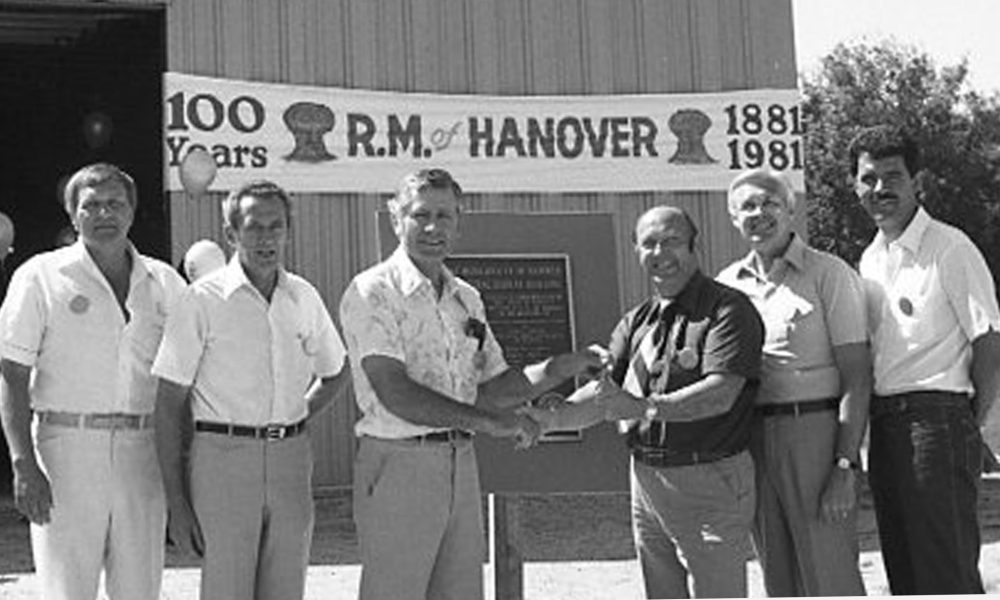
The municipality made another major contribution to the development of MHV in 1981, when Hanover provided a large agricultural display building as a centennial project.
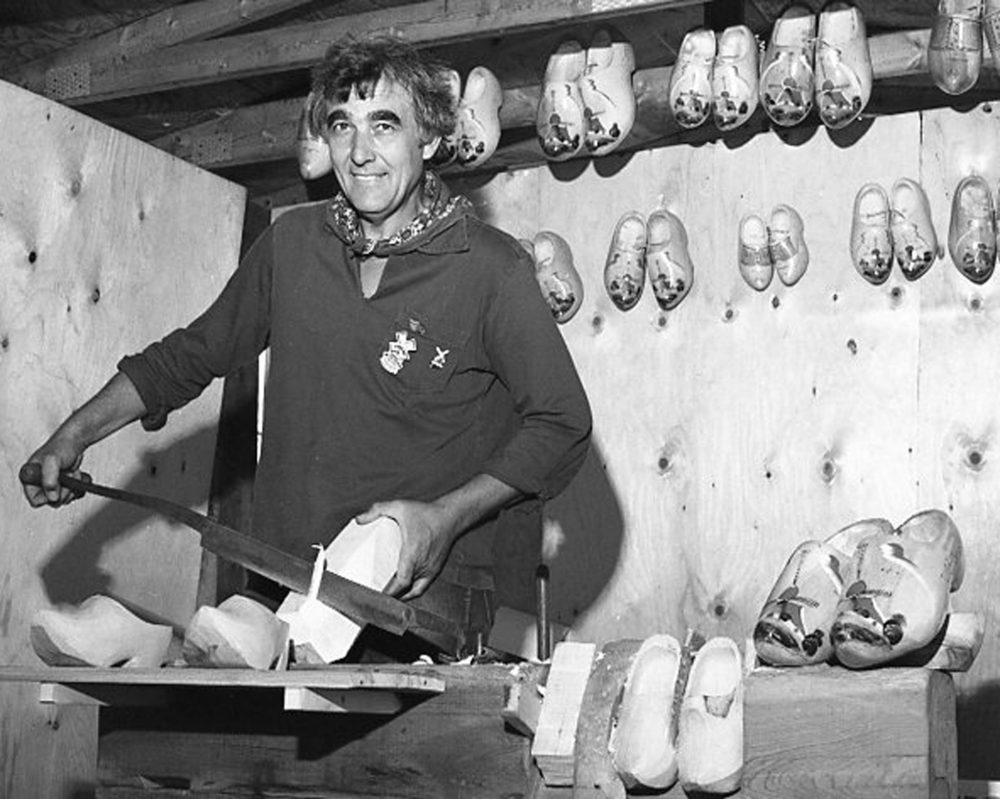
Every year, since it opened in 1967, visitors have been able to get a reminder of earlier times and watch MHV grow with constant additions of buildings and artifacts, and special exhibits as Pioneer Days featured demonstrations of how things used to be done.
Each year, crowds gather to watch the threshing machine and the saw mill in operation; sample bread baked in the outdoor oven, and on more than one occasion, witness the butchering of a hog. In recent years, the hog was not butchered on the grounds, but the carcass arrived ready to be cut and wrapped or to be used for demonstrations of the making of head cheese and crackles.
No big summer event would be the same without a parade, and Pioneer Days was no different, getting its start in conjunction with the Hanover Fair in 1964, and the celebrating of Steinbach’s 90th anniversary. Pioneer Days was the significant summer event a decade later, when Steinbach celebrated its centennial in 1974.
The August long weekend event grew in attendance, taking on a multicultural theme over the years. “Summer in the City” was later added to the June Steinbach event calendar, featuring street vendors, a midway and evening concerts with country singers and rock stars.
Down the road at Grunthal, the annual summer fair took on a new look, when a reorganized Hanover Agricultural Society sponsored the Hanover Fair in 1981, as one of a number of events celebrating the centennial of the RM of Hanover.
The same year, MHV honoured pioneers during the Saturday schedule of events during Pioneer Days.