
1946 – 2026 Watching Steinbach Grow: Being a veterinarian is no easy way to make a living
Advertisement
APRIL 11, 1973—Interviewing Dr. Steve Sonya in spurts between dozens of phone calls and interruptions, it becomes very apparent that being a veterinarian is no easy way to make a living.
On call 24 hours a day, the rural veterinarian is constantly harried. He is expected to make house calls, sometimes 80 miles away, and is constantly roused out of sleep to attend to emergencies, and called up without regard to weekends or holidays.
But that is the name of the game as far as a rural veterinary practise is concerned, and Sonya sees it as such.
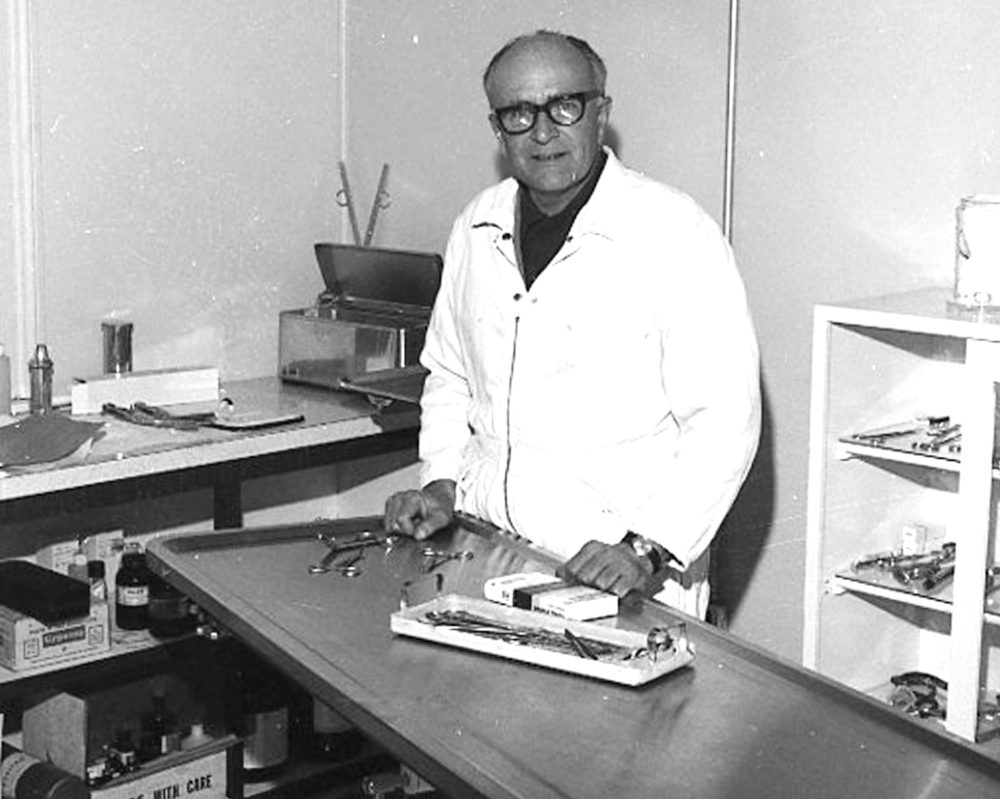
In 1972, Sonya had been the Steinbach area’s only permanent vet for over 16 years, though there were temporary assistants and summer replacements, on occasion. The reason there was onlyone vet, Sonya said, was that his office at his Reimer Ave. residence. didn’t have room for a second one.
But that has changed since Manitoba Agriculture Minister Sam Uskiw cut the ribbon on a brand new, spacious veterinary clinic just east of Steinbach, in October of 1972.
The new clinic, on Highway 52, serves the rural municipalities of Hanover, La Broquerie, Ste Anne and Tache and the Local Government District of Piney and the Town of Steinbach.
The clinic has a reception area, surgical rooms, and a residence for an assistant veterinarian and family. It is also equipped with animal handling machinery and holding pens for cattle and other animals, which will reduce the number of house calls the vet has to make.
Clinics like this are a recent development in Manitoba, the agriculture minister told guests at a ribbon cutting ceremony.
“In August of 1971, St Pierre-Jolys opened the first regional veterinary clinic in Canada and since then, 13 more have been built in Manitoba.”
Sonya and other Manitoba veterinarians had suggested, five years ago, that clinics would be a way to encourage veterinarians to practise in this province. By 1966, there were just two dozen vets in the province, and every year that number was dropping.
South East Veterinary Clinic will provide an opportunity for more vets and at the same time upgrade services, Uskiw said.
Since the regional clinics have been built, there has been an increase of at least 10 vets practicing in Manitoba, Uskiw noted.
In the past, it was difficult to get a veterinarian to work in a rural clinic, because of better wages and hours offered in city small animal clinics, dealing mostly with pets.
Since the opening of the clinic, Sonya is spending less time travelling than he used to but still makes an average of 10 to 13 calls a day, as he has in the past 17 years.
“It will take time for people to get used to the idea of bringing in their animals.”
For the first six months the clinic was open, most of the animals brought in were swine, dogs and cats. Ninety percent of them came from more distant points in the district like Piney, Vita and Sprague.
Most of Sonya’s calls were within 10 miles of Steinbach and the majority of the time he was dealing with cattle.