
1946 – 2026 Watching Steinbach Grow: Barkman Concrete Products building a better septic tank
Advertisement
It has often been said that necessity is the mother of invention, and that was never more true than in the case of the Steinbach plumbing and hardware firm that established the province’s largest concrete products plant, starting with the designing and building of a better septic tank for both urban and rural homes.
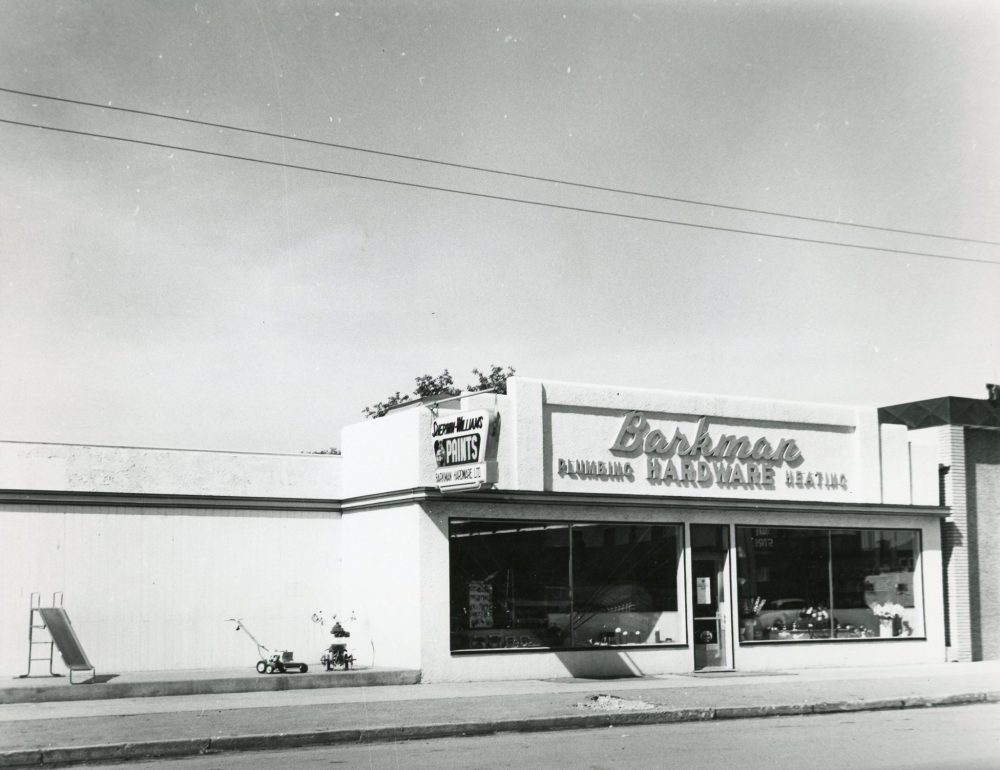
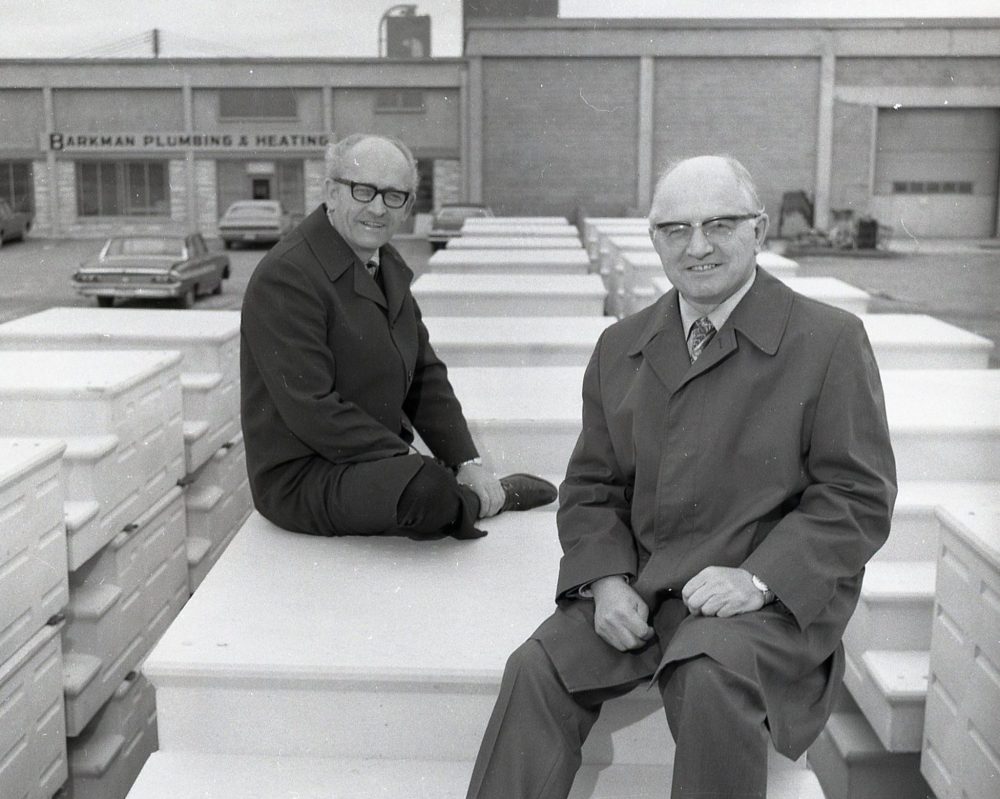
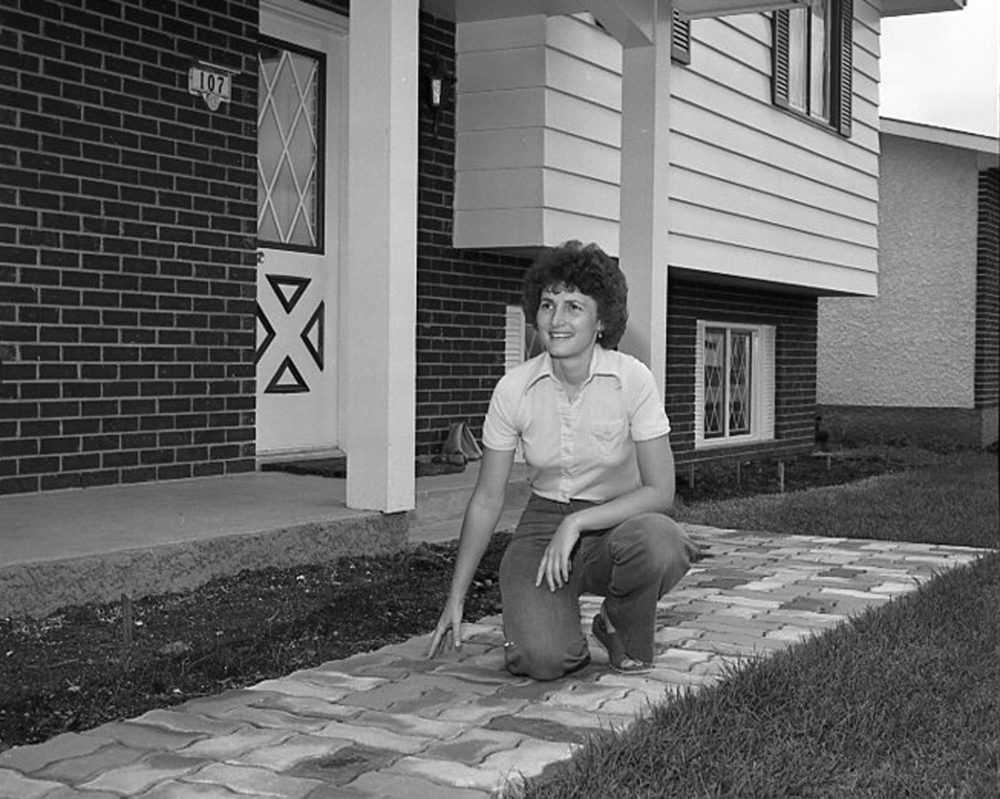
The first Barkman Concrete plant, built in 1960, produced precast septic tanks, around which the plant was built; it also produced precast concrete steps, sidewalk blocks, patio blocks and ornamental iron railings.
It was only 10 years earlier, in 1952, when the first precast septic tank was built in a small addition to the rear of the Barkman Hardware store on Main Street.
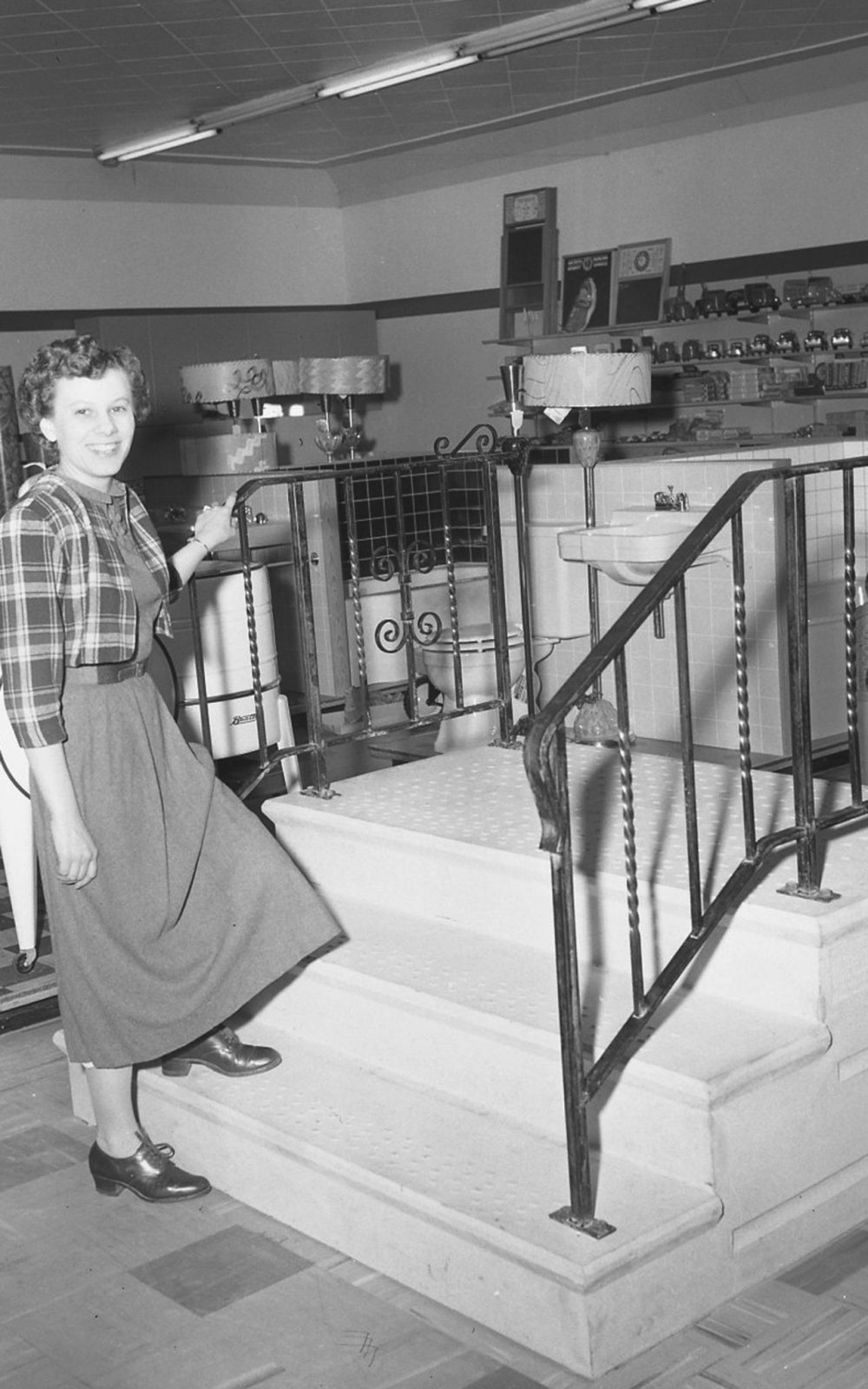
When K.R. Barkman and his three sons set up a hardware, plumbing, and heating business back in 1947, each of the three sons headed a department. Edwin managed the hardware store, Peter acted as trouble shooter and salesman for heating and plumbing and Arnold was in charge of plumbing installations.
Arnold used to hate building septic tanks on the job. The traditional way of doing it was to dig a hole, build a wooden form, haul in gravel and cement, mix and pour. If it happened to rain before the form was in, it sometimes delayed construction for weeks.
Arnold convinced himself that there must be a better way. He learned that in many parts of the United States, concrete septic tanks were being made, but these were not suitable for use in Manitoba’s cold climate. Arnold realized he was faced with the fact that if he wanted a better septic tank, he would have to perfect it himself.
In the summer of 1952, the Barkman family witnessed the production of the first Barkman all-concrete septic tank. Twenty-four more rolled off the “assembly line” in the small building at the rear of the Barkman Hardware store on Main Street.
Four of those leaked so badly that they had to be removed after installation; several more fell apart when workmen did not handle them as gently as they should have.
Despite these setbacks, the experiment proved to be a major breakthrough for Arnold Barkman. The septic tanks he had built contained an all-concrete bell and siphon of his own design, and these worked perfectly.
It was the first of its kind in North America and the lack of structural strength on the first few tanks was overcome quite easily. Barkman later mused that they could have patented the Barkman septic tank at the time, but didn’t have the $2,800 patent fee.
From that modest beginning arose the new plant, a tribute to the industriousness of its owners, and an important factor in the economic development of Steinbach.
By 1962, half a dozen trucks carrying the Barkman made septic tanks or steps could be seen anywhere in Manitoba, almost any time of the year. At least 25 men worked full-time in their manufacture, and more were employed as salesmen.
Since half of Manitoba’s population lived in Winnipeg, the Barkman firm built a modern sales office and distribution centre in the summer of 1961 for the marketing and installations of steps or tanks there.
The heavy beams on which the all-concrete roof of the original plant rested were poured in place on the job, but the entire concrete showroom and distribution centre was precast in the Barkman plant and assembled on the Winnipeg site.
Most of the production equipment used in the Barkman Concrete plant was built in Steinbach. Six electric-hydraulic cranes, capable of handling up to 10 tons each, were built right in the plant, using nothing more than a lathe, a saw and a drill press. Forms for the concrete products, the bins in which gravel and cement were stored, and an elevator that took loads of mixed concrete to and from the mixer, were all built in the plant at colossal savings.
The cranes, for instance, cost the company less than $3,500 to build and would have cost at least $10,000 to buy.
While Arnold Barkman stayed very close to designing things used in the plant, he always gave full credit to his foreman, Elmer Goossen, who just loved to build things. In 1962, for example, they built a Hyster to use around the yard.
It did everything Barkman wanted it to do and cost about $3,000, including the old truck, which provided the power, as compared to $12,000 for a new Hyster.
Thanks to experience gained in a much smaller building, the new plant was designed to perform at top efficiency, with the least amount of manual effort.
Gravel brought to the plant was dumped into a basement chute, and from there elevated to the second floor. Here it passed through a sieve and the various sizes of gravel slid into designated bins. The man who mixed the gravel had at his fingertips the size of gravel he needed for various jobs.
Another problem that had to be overcome in the early days of the business was that of shipping. Here again, the Barkmans set about to design a hydraulic loader, which would make it easy to load and unload the tanks, which weighed as much as 10,000 lbs. each.
Over the years, the Barkman firm designed and developed several types of disposal fields and the tanks for them. Of particular interest to them was a disposal system they developed for large schools or business places.
The Barkmans are not saying what concrete products they have in mind for the future, but are quite happy to share their formula for success.
“Never say die, and work like you have never worked before.”