
COLUMN: Tales from the Gravel Ridge – The joy of the garden
Advertisement
A few short months ago, leaves began to sprout with glorious abandon from every deciduous tree and shrub in our part of the world. As in other years, we welcomed the beauty and magnificence of this canopy of every shade of green erupting before our very eyes, thankful that the long cold months of winter were fast becoming a faint memory.
Living as we do in the northern hemisphere, this wonderful umbrella of flourishing foliage which has been a delight for all of us throughout spring and summer is slowly but inexorably beginning to hint of another seasonal change coming our way. At first it may be a small leaf or two from one of our amur maple trees falling to the ground that caught our attention. We can’t ignore these changes for long, because every time we take a walk through the freshly accumulated ground cover underneath our feet, the rustling sound becomes more and more apparent. The changing colours of these rustling leaves have, of course, not escaped our notice either.
We might also have observed the slightly changed behaviour of birds and squirrels that make their homes in our backyard. They might have provided us with reminders that nature all around us knew within their very being that a change in weather was on its way.
On the surface these changes may appear to be superficial. We know, of course, that in fact they are vital to the survival of plant life as it prepares itself for each changing season, and so do all manner of animals. For humans, these annual natural occurrences provide hope for the next growing season. In an agrarian society paying attention to these small and seemingly simple changes is vital to our own survival. Such is the nature of a climate consisting of four distinct seasons.
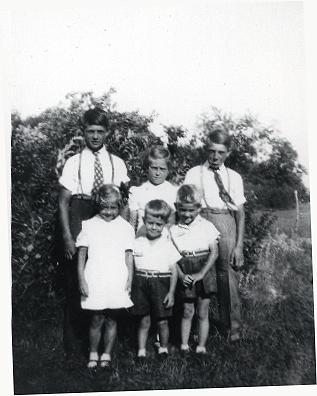
When my parents, Katarina and Cornelius Falk planted seeds in spring each year, be it vegetables or potatoes, it was in the full expectation and hope that these actions would augment the food supply for the coming year. I distinctly remember how our parents went about this yearly ritual. My father would till the garden plot with a one-horse plow, followed by running a harrow over it. The shiny blade of the plow neatly sliced through the earth which, given that it was virtually adjacent to the gravel ridge, was nevertheless a remarkably rich dark soil.
The next stage was running straight lines at approximately 45 cm intervals between them to mark the distance between the future garden rows. My father was meticulous about arithmetical precision. To achieve the necessary precision for the symmetry of the garden rows, he used a wooden hand-made device which I suspect he may have made himself. This piece of equipment called “garden row maker” consisted of a long wooden crossbar approximately 180 cm wide, with four tines or prongs attached to it at a 90 degree angle at equidistant intervals. The tines were also made of wood. A pole, to which a horse could be attached essentially completed this piece of equipment. When the garden plot was ready, the children of our family helped to plant the seeds. Food production was a family project on various levels.
I have no doubt that gardening gave my mother a great deal of pleasure. As that relatively small garden plot began to provide fresh produce to add to our summer evening meals, she didn’t think for a minute that the hard work wasn’t worth the effort that went into it. Throughout summer and well into fall, our mother busily canned peas and beans, along with a range of other products. Of course dill pickles and all sorts of preserves began to fill the shelves in our cellar as well. Although much of the work fell to our mother, the entire family was also involved in helping in one way or another.