
COLUMN: Carillon Flashback September 29, 2002 – Grow projects bring out the best
Advertisement
Throughout the Southeast, farmers, individuals and corporate sponsors are donating time, equipment and services to harvest grain for developing countries. In Manitoba, 28 community growing projects are harvesting 3,000 acres of grain for the Canadian Foodgrains Bank (CFGB).
A lump rises in his throat every time he is at a harvest, according to CFGB Manitoba/Saskatchewan coordinator Henry Klassen.
“It is the coming together of all the efforts. It is a coming together of various faiths and is a Christian response to hunger.”
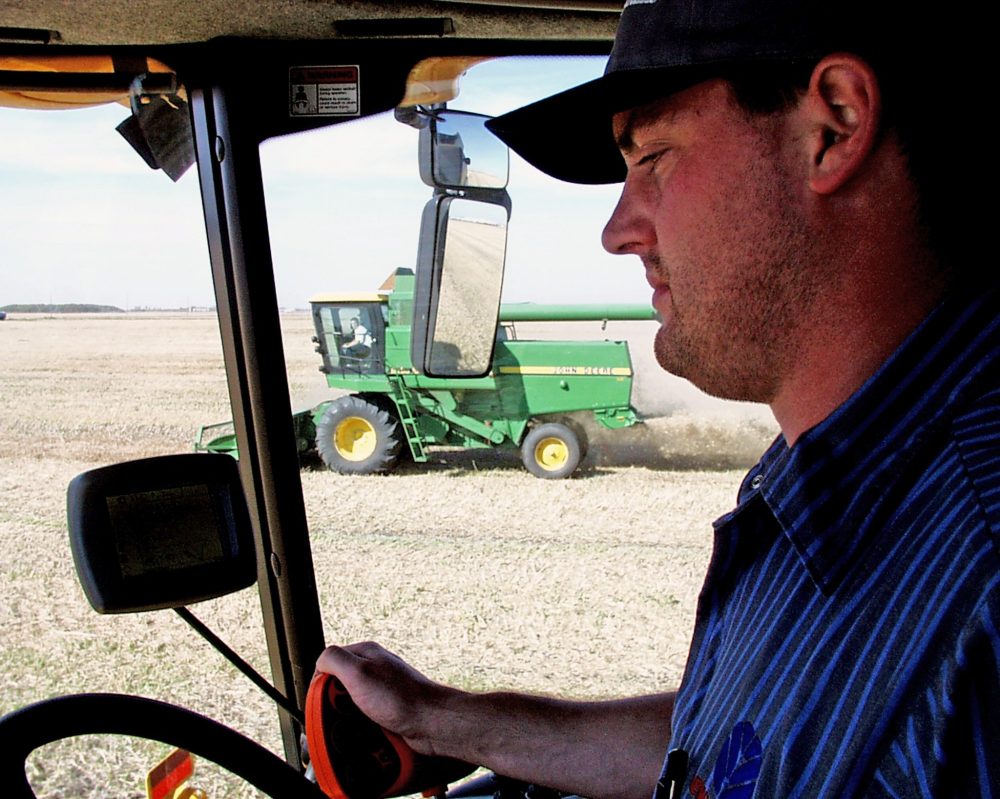
Klassen is amazed at how willing farmers are to leave their own fields during the busy harvest season to harvest grain for others.
Friday afternoon, volunteers harvested 300 acres of wheat, oats and flax for the Helping Other People Eat (HOPE) growing project in the Arnaud area.
Saturday, the Landmark project harvested 90 acres of wheat yielding 30 bushels per acre. Tuesday afternoon, volunteers harvested 180 acres of canola on three fields near Steinbach for the Blumenort and area project.
Also on Tuesday, Niverville and District harvested 130 acres of canola on one field. The Randolph Abundant Harvest growing project will also soon harvest 100 acres of canola.
“If I miss even one harvest, I feel I’ve missed a lot.” Klassen says, adding he enjoys the atmosphere of people working hard and taking time to enjoy the food, fellowship and interaction.
When the crops have been harvested and donated to CFGB the Canadian government matches donations, usually at a ratio of four to one, to a maximum of $16 million.
The harvest is only one aspect of community growing projects. Each growing project has a committee that oversees the project. Identifying land is the most difficult part of the project. In some communities, the same people donate land each year. In other communities land is donated to CFGB projects on a rotational basis or crop land is rented.
Once the land has been identified, numerous other decisions are made pertaining to seed, fertilizers and chemicals.
CFGB’s “proven track record of truth, integrity and respect” helps attract corporate sponsors who work alongside farmers to make these projects a success.
Klassen says there is a lot of generosity, with corporate sponsors adding seed, chemicals, grain handling fees and machinery to assist the grow projects.
Farmers like to work hard, but they also like to eat, and it is not unusual for restaurants to provide food for the farmers and visitors during the harvest, Klassen added.
As a retired customs officer, Klassen says he is amazed at his good fortune to be able to work with people who demonstrate this type of generosity and kindness in such a quiet and humble way.
In Canada, the biggest problem is not what to eat, but how much to eat, but CFGB provides food to countries where people have to make a choice of who will eat and who will go hungry.
Growing projects also build strong communities. The Canadian Food Grains Bank coordinator cites an example from Aberdeen, SK, when the town’s only restaurant closed. A Mennonite church congregation started a community lunch program. Families take turns bringing food, and meals are served at the church after the morning service. Cash donations for CFGB are placed in an ice cream pail.
“That small town of 300 people raised $5,000 through their lunch program.”
In 2001, CFGB raised $5.9 million through grain and cash donations and received $16 million from the Canadian government.
– with files from Gladys Terichow