
Adoption to permanent Daylight Saving Time 28 years in the making
Advertisement
Come November, Manitobans will stay on Daylight Saving Time as they will no longer have to set their clocks back one hour due to the province’s decision to abandon seasonal time changes, which one MLA said is a long time coming.
“I’ve been at the legislature for 28 years, and we have talked about it and studied it and debated it and discussed it for 28 years, and Manitobans every year say, why are we doing this?” said Springfield-Ritchot MLA Ron Schuler, who has been advocating for the change since the last election.
“Do I view this as a personal win? I would say this is more of the public has really pushed for this, and they’ve been patient, and they’ve pushed hard for this, and it is, I think, the public’s win,” said Schuler.
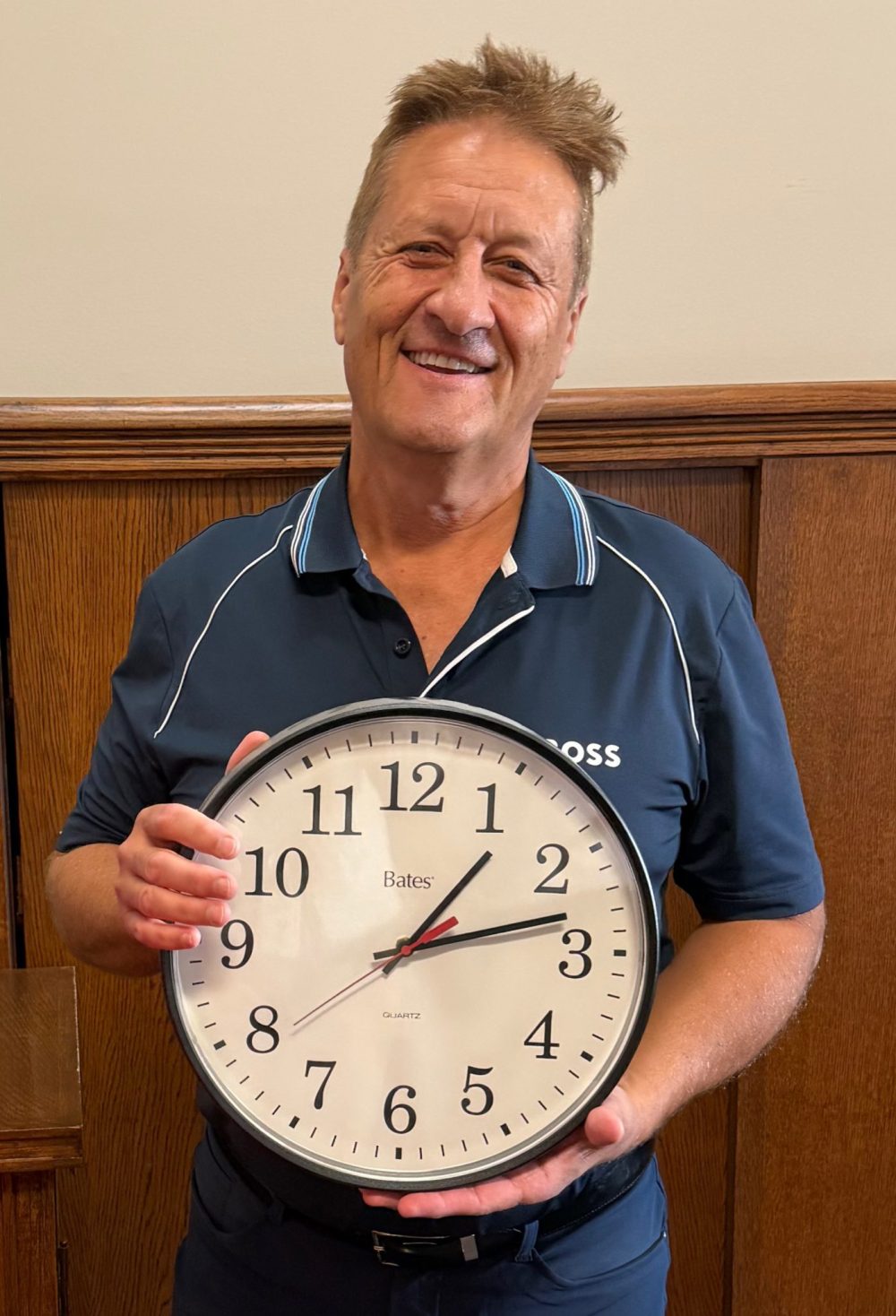
Schuler brought the matter of not changing the clock in March and November after being lobbied by constituent Neil Van Ryssel, a dairy farmer in Oakbank.
“It’s ridiculous (changing the clocks),” said Van Ryssel. “We don’t make any more sunshine. Saskatchewan is our neighbour, they don’t change time.”
Van Ryssel approached Schuler because he’s his MLA, but also because he saw Schuler as an outlier in the Progressive Conservative caucus due to his refusal to get vaccinated during COVID leading to his expulsion from cabinet by former Premier Heather Stefanson. Van Ryssel thought Schuler wouldn’t follow the party line and would be more likely to promote the abandonment of time changes in the spring and winter to the NDP government.
“Well, I thought they wouldn’t assume that he was part of the Conservative stronghold, so he’d be a good one to bring it forward. I don’t think he’d think of it,” said Van Ryssel.
British Columbia changed its clocks one last time this March, while Alberta will make the change to permanent Mountain Daylight Time, or Alberta Time, this November followed quickly by the Northwest Territories as it wants to be in line with Alberta. Saskatchewan has been on permanent Central Standard Time (CST) since 1966. Yukon ended its seasonal time change in 2020. Ontario passed legislation in 2020 that it will change to Daylight Saving Time (DST) if Quebec and New York do the same.
The new time change in Manitoba will be known as Central Daylight Time (CDT).
“I’m happy with the premier. It’s not because I voted for him because I didn’t. But he looks at everything and makes up his own mind and he acts like he’s a free thinker and I appreciate that in him,” said Van Ryssel.
In May, the province surveyed about 72,000 Manitobans and a total of 92 percent wanted to see an end to seasonal time changes. The majority (58 percent) preferred to stay on permanent DST, while 34 percent voted to eliminate the time change but stay on CST.
“Permanent Daylight Saving Time is good for our health, good for business and good for parents. For families, especially those with young kids, that one-hour shift can disrupt sleep and routines for days. This change means one less adjustment families have to deal with each spring and fall,” stated Premier Wab Kinew in a press release.
According to a Manitoba Health, Seniors and Long-Term Care analysis, Manitobans would benefit with a permanent time change whether it be CST or CDT. Because of Manitoba’s northern latitude, daylight hours in winter are very short. Long winter nights contribute to seasonal affective disorder and winter blues for some people. While the body naturally follows CST with its circadian rhythm, changes to DST have in the past led to a number of health problems, such as heart attacks, and road accidents as people adjust to the time change.
Staying on CDT in the winter would shift an hour of available light from early morning to late afternoon. For many Manitobans that can mean the difference between leaving work in the daylight versus darkness, which could potentially increase mood and reduce the sense of isolation in the winter, as well as providing more daylight for recreation and physical activities later in the day.
A European study found no overall increase in depression associated with CDT and in some cases, measures of life satisfaction increased with more evening daylight, according to the Manitoba Health analysis.
Doctors Manitoba president Dr. Alon Altman issued a statement in support of ending the twice-yearly time change as it affects people’s sleep and physical and mental health.
“While permanent standard time may offer the closest alignment with our natural circadian rhythm, permanent daylight time offers other health and societal benefits, particularly more usable sunlight in the late afternoon and evening. We encourage Manitobans to make the most of the extra daylight by getting outside and being active,” stated Altman.
The organization, which represents more than 4,000 doctors, surveyed physicians in the early spring with 390 responding.
More than 80 percent of surveyed members agreed with ending seasonal time changes, with only 14 percent disagreeing as they felt it would be out of step with neighbouring jurisdictions and would confuse people.
With the change to CDT, Manitobans will have almost 16.5 hours of daylight during the summer and a little more than eight hours during the winter.
One group that is hoping to reap the benefits of CDT is the Manitoba business community. Kinew noted that the government is working closely with organizations, businesses, and industry partners as it implements CDT.
“More daylight in the evening means more opportunity for restaurants, retailers, farmers, and communities across our province to make the most of the day,” said Loren Remillard, president and CEO of the Winnipeg Chamber of Commerce.
“Ending the twice-a-year clock change reduces friction for companies working across provincial borders and offers all Manitobans greater predictability and stability.”