
Steinbach comes together for Orange Shirt Day
Advertisement
Eunice Harrison, a member of the Roseau River Anishinaabe First Nation, spoke about reconciliation and family connections on National Day for Truth and Reconciliation (NTRC), at the Mennonite Heritage Village in Steinbach.
Orange Shirt Day is held on Sept. 30, to honour Indigenous children who were separated from their families and placed in residential schools.
In a room of about 30 people, Harrison discussed the Truth and Reconciliation Commission: Calls to Action. She said the commission’s calls to action include the rights and the treaties, and have led to changes in Canada’s citizenship oath and several initiatives.
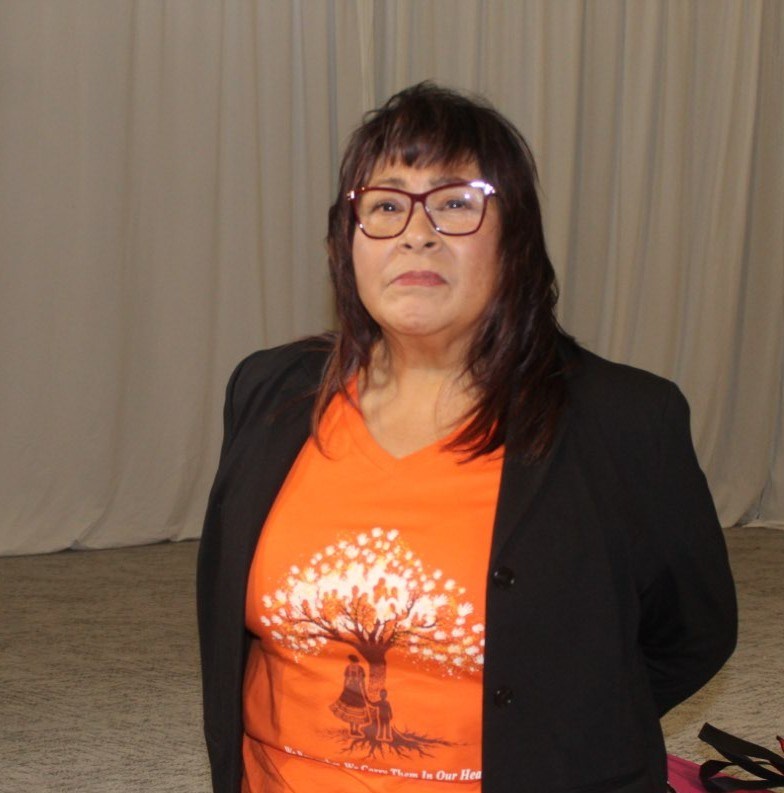
Harrison said reconciliation begins with listening and learning the truth.
“Receive the lived experience with humility. Understand how history continues to shake those even today,” she said.
Harrison worked with the Government of Canada for 35 years. While working with the government, she became the first moderator to speak during the inaugural Orange Shirt Day observance in 2017. However, Harrison had to overcome several challenges to make it possible.
“I recognized that I need to navigate alongside federal public service leaders and politicians,” she said. “Keeping in mind, in 2013, there was an awareness of Orange Shirt Day. It took the federal government that long to come out to speak.”
She said people at the time would tell her that it was inappropriate. However, Harrison raised funds with the support from some allies and was able to get residential school survivors to share their experiences.
Harrison said the residential school system was designed to separate Indigenous children from their families, language and cultures.
“Struggles from those impacts included the inability to love your own children and understand what a healthy relationship looks like,” she said.
Harrison’s mother once told her that showing affection to her grandchildren was difficult for her because of her residential school experience.
“But she loved them, and I knew that. She told me so,” she said.
Harrison said the impacts of residential schools are passed on to the next generation, resulting in intergenerational trauma. Harrison is the second generation of a residential school survivor.
“We were taught it would take seven generations for us to heal,” she said. “My parents struggled with the impacts of trauma, and they resorted to alcohol. There were times when there was no food.”
Harrison said her journey to reconciliation began when she saw a psychotherapist in her adult life.
“I could find a path forward without carrying the weight of every pain that was in my part of my life,” she said.
Harisson said she hopes that through her presentation, people will have mutual respect and kindness that can lead to actual reconciliation.