Agriculture

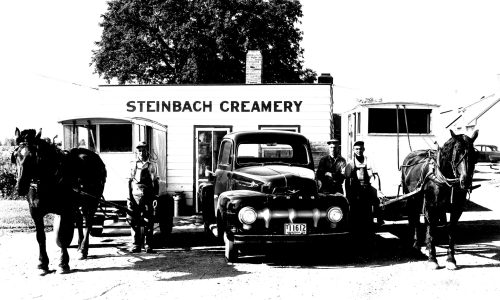
COLUMN: Carillon Flashback 1985 – Farmers arrive in Canada

Wes Keating 12 minute read Wednesday, Nov. 26, 2025

Carillon Flashback February 6, 1985

Europeans have adapted well to Manitoba farms

by WES KEATING

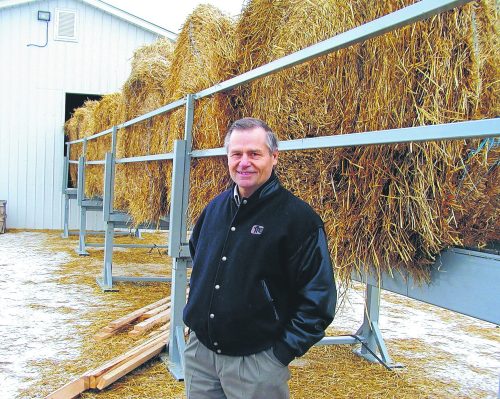
The drop in the value of the Canadian dollar in the early 1980s was among several factors which prompted dozens of Europeans to immigrate to Manitoba to take up farming.

Advertisement

Advertise With Us

Weather

Jan. 18, 6 AM: -15°c Snow Jan. 18, 12 PM: -19°c Cloudy with wind

Steinbach MB

-19°C, Blowing snow

Full Forecast

Made in Winkler invention garners international attention

Greg Vandermeulen 4 minute read Preview

Made in Winkler invention garners international attention

Greg Vandermeulen 4 minute read Saturday, Nov. 22, 2025

Producers have a more efficient way to separate the wheat from the chaff thanks to a new style of concave invented by Thunderstruck Ag CEO Jeremy Matuszewski.

It’s an invention that has already garnered international attention and was listed as one of Time Magazine’s best inventions of 2025.

Matuszewski said he started working with combines in 2016 and quickly became aware of some of the challenges involved in the concave, the part that separates the grain from the chaff.

“I realized there was an issue, but I didn’t really have a solve for it,” he said.

Read
Saturday, Nov. 22, 2025

SUPPLIED
Thunderstruck Ag CEO Jeremy Matuszewski shares his invention at one of the many trade shows he attends.

SUPPLIED
Thunderstruck Ag CEO Jeremy Matuszewski shares his invention at one of the many trade shows he attends.

Grow Hope addresses global food insecurity thanks to Canadian farmers

Svjetlana Mlinarevic 7 minute read Preview

Grow Hope addresses global food insecurity thanks to Canadian farmers

Svjetlana Mlinarevic 7 minute read Saturday, Nov. 22, 2025

For the past 10 years, the Mennonite Central Committee’s Grow Hope has been addressing global food insecurity by enlisting farmers to donate their time and fields to growing grains which are sold for a profit and the money distributed to people in need.

“It’s lovely to celebrate 10 years because every new initiative has a first year, and yet you wonder how it will grow over time. It’s grown to a pleasant size for us at MCC Manitoba,” said Darryl Loewen, executive director.

Grow Hope began when Niverville farmer Grant Dyck had the idea to donate some of his land to grow food for the hungry. He approached MCC Manitoba staff to run a program similar to the ones being run through the Canadian Food Grains Bank (CFGB). The difference with other CFGB programs is that MCC Manitoba would manage it, recruit farmers, and recruit donors.

“The notion being that we put food producers together with food consumers, rural and urban, and connect people in the effort to address food security around the world,” said Loewen.

Read
Saturday, Nov. 22, 2025

Photo from MCC/Fairpicture photo/Uma Bista
From left: Shova Beshra (33), Kalpana Kumari Marandi(30) and Chanmuni Tudu Satar (31) are showing fish before taking them to the local farmers’ market in Santhal Tole, Nepal on Tuesday, April 23, 2024. They are members of Sanathbha Aaya Arjan Woman Farmers Group, which is a communal fish farm in their village.

Photo from MCC/Fairpicture photo/Uma Bista
From left: Shova Beshra (33), Kalpana Kumari Marandi(30) and Chanmuni Tudu Satar (31) are showing fish before taking them to the local farmers’ market in Santhal Tole, Nepal on Tuesday, April 23, 2024. They are members of Sanathbha Aaya Arjan Woman Farmers Group, which is a communal fish farm in their village.

U.S. ethanol imports force out Canadian producers, domestic industry at risk: expert

Matthew Frank 12 minute read Preview

U.S. ethanol imports force out Canadian producers, domestic industry at risk: expert

Matthew Frank 12 minute read Friday, Nov. 21, 2025

Manitoba ethanol producers and experts are raising alarms that U.S. subsidized biofuel imports could push domestic biofuel production to the brink of collapse.

The province’s only ethanol plant, located in Minnedosa, 240 kilometres west of Steinbach, will no longer be profitable by 2034 and could face layoffs or potentially shut down, said senior plant manager Avi Bahl.

Owned by Calgary-based oil and gas firm Cenovus Energy, the Minnedosa Ethanol Plant produces more than 160 million litres of ethanol annually. But due to heavily subsidized U.S. ethanol being imported at cheaper prices and favoured by federal policies, he said his plant can’t compete.

“We’re not looking for handouts, we just want a level playing field,” Bahl told The Carillon.

Read
Friday, Nov. 21, 2025

MATTHEW FRANK THE CARILLON

Piles of dried distilled grain are one of the two byproducts from ethanol production. The grain can be used as livestock feed.

MATTHEW FRANK THE CARILLON 

Piles of dried distilled grain are one of the two byproducts from ethanol production. The grain can be used as livestock feed.

Advocates raise environmental alarms over North Dakota dairy farm approvals

Matthew Frank 7 minute read Preview

Advocates raise environmental alarms over North Dakota dairy farm approvals

Matthew Frank 7 minute read Wednesday, Oct. 15, 2025

Environmental advocates on both sides of the border are concerned the approval of two large-scale dairy farms in North Dakota will damage the Red River and Lake Winnipeg’s water quality due to potential untreated manure runoff.

North Dakota’s Department of Environmental Quality approved a permit on Sept. 24 to build the Heberg Dairy, a 25,000- cow farm near Hillsboro, roughly 235 kilometres south of Steinbach. The state department also granted another permit in January for a separate 12,500-cow farm in Abercrombie, nearly 110 kilometres south of Hillsboro.

Both farms are owned by Minnesota-based firm Riverview LLP and are located within 2.5-kilometres from the Red River. Combined, the two farm’s cow populations nearly equal all of the dairy cows in Manitoba. In 2024, the province had 43,500 dairy cows shared between 226 farms.

James Beddome, executive director for environmental non-profit Manitoba Eco-Network, sees the potential run-off from land sprayed with the manure causing irreparable damage to the Red River and Lake Winnipeg.

Read
Wednesday, Oct. 15, 2025

MATTHEW FRANK THE CARILLON

Advocates say the Red River and Lake Winnipeg are at risk after two large-scale dairy farms near the river were approved in North Dakota.

MATTHEW FRANK THE CARILLON 

Advocates say the Red River and Lake Winnipeg are at risk after two large-scale dairy farms near the river were approved in North Dakota.

Fibre industry flexes muscles in Manitoba

Matthew Frank 7 minute read Preview

Fibre industry flexes muscles in Manitoba

Matthew Frank 7 minute read Wednesday, Oct. 15, 2025

For Remko Stalman, sheep shearing is more than cutting wool. It’s all about the technique.

As he grabs a sheep with a coat ready to be cut, it squirms, kicking its legs to break free. But with each buzzing pass of the shears, Stalman shifts his feet, the sheep settles and quiets. The whole process takes only three minutes to get a complete wool fleece.

“I don’t look at a shearer anymore to see how he’s shearing or how the wool comes off,” the 45-year-old told The Carillon. “To me, it’s how does he position his feet? Where does his feet go? How does the sheep lay? That’s the technique that if you can get good at it, then you’ll have good sheep.”

Stalman started raising sheep at his farm eight kilometres east of La Broquerie in 2016. His farm has now grown to 450 ewes. In 2019, Stalman decided to start shearing both his and other farms’ sheep. But during many shearings, he saw the cut wool wasted and land on burn piles because there were no use for the fleeces.

Read
Wednesday, Oct. 15, 2025

MATTHEW FRANK THE CARILLON
Remko Stalman maneuvers a sheep to cut a complete fleece.

MATTHEW FRANK THE CARILLON 
Remko Stalman maneuvers a sheep to cut a complete fleece.

Top rodeo credits volunteers and sponsors

Greg Vandermeulen 8 minute read Preview

Top rodeo credits volunteers and sponsors

Greg Vandermeulen 8 minute read Saturday, Oct. 11, 2025

There are a few good reasons why Richer Rough Stock Rodeo was named the Heartland Rodeo Association (HRA) rodeo of the year for 2025. And those reasons also explain why this is their ninth award in 11 years.

“I think southeastern Manitoba is a hotbed for rodeo,” Richer Rough Stock Rodeo president Pat Stolwyk said. “There’s no doubt about it with Grunthal being close and also Beausejour. We’re also very close to Winnipeg so that helps.”

It’s typically western Manitoba that people would associate with belt buckles, cowboy boots, cowboy hats, and horses.

But the Southeast continues to supply competitors and fans for a variety of rodeos, including those hosted by the HRA.

Read
Saturday, Oct. 11, 2025

SVJETLANA MLINAREVIC CARILLON ARCHIVES

A four-year-old tries her hardest to hang on during the mutton busting event at the Richer Rough Stock Rodeo in 2024.

SVJETLANA MLINAREVIC CARILLON ARCHIVES 

A four-year-old tries her hardest to hang on during the mutton busting event at the Richer Rough Stock Rodeo in 2024.

COLUMN: The Carillon Flashback July 27, 1994 – Huge Tritek barns reflect a bright future for hogs

Wes Keating 7 minute read Preview

COLUMN: The Carillon Flashback July 27, 1994 – Huge Tritek barns reflect a bright future for hogs

Wes Keating 7 minute read Friday, Oct. 10, 2025

Only modesty prevents La Broquerie’s Vielfaure brothers and the boss of Boss Hogs Farms from agreeing they are on their way to becoming Manitoba’s largest hog producers.

A pair of huge barns under construction southwest of La Broquerie will house 2,500 sows in a farrow-to-weanling operation. Once the facility, a joint venture known as Tritek Farms, is in full production, Don Janzen and Paul, Denis and Claude Vielfaure will be supplying 150,000 weanlings to the feeder market annually.

Janzen, who started in the poultry business with his father and expanded into hogs in 1986, says the challenges of a non-supply-management commodity are different. Not being controlled like dairy or poultry, both production numbers and efficiency have to be there to succeed in a wide open market, he emphasized.

Janzen bought his father’s farm in 1980 and currently has 2,500 sows on three separate locations; one near Randolph, one near New Bothwell and a third 10 miles south of Steinbach.

Read
Friday, Oct. 10, 2025

CARILLON ARCHIVES

Don Janzen and Roger and Curt Loewen have a roof over their heads as the final rafters are being lifted into place by a crane at the first of two Tritek hog barns is nearing completion in the La Broquerie area.

CARILLON ARCHIVES 

Don Janzen and Roger and Curt Loewen have a roof over their heads as the final rafters are being lifted into place by a crane at the first of two Tritek hog barns is nearing completion in the La Broquerie area.

Federal canola tariff bailout misses mark: Manitoba growers

Matthew Frank 4 minute read Preview

Federal canola tariff bailout misses mark: Manitoba growers

Matthew Frank 4 minute read Sunday, Sep. 21, 2025

Manitoba canola producers and advocates say federal tariff support measures, while welcomed, still fall short for helping the industry weather the instability caused by Chinese levies.

On Sept. 5, Prime Minister Mark Carney announced more than $370 million worth of tariff support measures for Canadian canola producers and new biofuel production incentives. The federal government will amend the Clean Fuel Regulations for a two year period so the biofuel industry can grow and become competitive, a press release said. The new measures also include increasing the loan limit for domestic canola producers to $500,000 and spending $75 million over five years to expand the federal AgriMarketing Program, which helps producers explore new countries and markets for their products.

Warren Ellis, chair of the Manitoba Canola Growers Association, sees domestic biofuel production as a means for providing stability to the canola market and developing environmentally clean fuel.

“We’re really hoping to get this biofuel marketing going because we really see is it as something with huge potential,” he said.

Read
Sunday, Sep. 21, 2025

MATTHEW FRANK THE CARILLON

Mike Reimer, a farmer north of Steinbach, stands with a combine before he checks his canola fields on Monay. He labeled the federal tariff support for farmers as “Band-Aid” solutions.

MATTHEW FRANK THE CARILLON 

Mike Reimer, a farmer north of Steinbach, stands with a combine before he checks his canola fields on Monay. He labeled the federal tariff support for farmers as “Band-Aid” solutions.

Titan Environmental on way to being a giant of industry

Wes Keating 4 minute read Preview

Titan Environmental on way to being a giant of industry

Wes Keating 4 minute read Wednesday, Aug. 13, 2025

Titan Environmental at Ile des Chenes is no longer the tiny company of four men and a truck it was when it was started in a Grande Pointe garage, nearly 20 years ago.

Today, the company, which has just moved its corporate headquarters to a new location in Ile des Chenes, has grown to seven locations in Canada, and one in the United States.

Titan President Juice Lambert says while they started in agriculture, providing geomembrane linings for hog lagoons, today their company’s expertise and high quality geosynthetics solutions are strongly focused on the mining industry.

Those lagoon lining projects, although smaller in scale than the company would soon become known for, presented certain challenges that shaped this growing company. Titan helped hog producing clients to reduce the risk of contaminating ground water, while protecting the environment as cost effectively as possible.

Read
Wednesday, Aug. 13, 2025

WES KEATING THE CARILLON

Titan Environmental president Juice Lambert at the company’s new headquarters in Ile des Chenes.

WES KEATING THE CARILLON 

Titan Environmental president Juice Lambert at the company’s new headquarters in Ile des Chenes.

COLUMN: Carillon Flashback September 19, 2002 – ‘City of pigs’ triggers natural grazing pastures

Wes Keating 4 minute read Preview

COLUMN: Carillon Flashback September 19, 2002 – ‘City of pigs’ triggers natural grazing pastures

Wes Keating 4 minute read Monday, Aug. 11, 2025

Almost 5,000 yearling beef cattle graze on 6,000 acres of natural grassland fertilized with manure generated by 100,000 pigs housed in 43 nearby barns. Four years ago, Robert and Jodi Krentz, who own Evergreen Farms near Pansy, sold parcels of land to hog producers.

They held back grazing rights and made an agreement with the producers that manure generated by the hog operations would be available for their pastures.

Robert Krentz says he triggered the barns because he wanted the manure. They now have a “city of pigs” in their neighborhood, supplying Evergreen Farms with all the good fertilizer they need.

This unique partnership, along with their success in improving their pastures through an innovative rotational grazing system, was recognized by the Seine-Rat River Conservation District naming Robert and Jodi Krentz the District’s 2002 Farm Family.

Read
Monday, Aug. 11, 2025

CARILLON ARCHIVES

The newly formed Seine-Rat River Conservation District has named Jodi and Robert Krentz its 2002 “Farm Family-of-the-Year”.

CARILLON ARCHIVES 

The newly formed Seine-Rat River Conservation District has named Jodi and Robert Krentz its 2002 “Farm Family-of-the-Year”.

Tapping into the power of the past with steam

Matthew Frank 8 minute read Preview

Tapping into the power of the past with steam

Matthew Frank 8 minute read Monday, Aug. 11, 2025

For Dylan Peters, operating a steam engine is more than driving a machine – it’s a whole-body experience.

When the engine is in full swing, it can be felt in your bones, he said.

“You can smell the heat coming off of it. You can smell the steam, the oil. It just smells powerful,” Peters said.

Peters is part of a group of steam enthusiasts who put on a full demonstration of the Mennonite Heritage Village’s steam engine on Saturday, as part of Pioneer Days.

Read
Monday, Aug. 11, 2025

MATTHEW FRANK THE CARILLON

MATTHEW FRANK THE CARILLON

COLUMN: Carillon Flashback April 25, 2013 – Holtmann brothers recycle manure at Rosser Holsteins

Wes Keating 5 minute read Preview

COLUMN: Carillon Flashback April 25, 2013 – Holtmann brothers recycle manure at Rosser Holsteins

Wes Keating 5 minute read Sunday, Aug. 10, 2025

Henry and Tony Holtmann have never been prone to letting others try out new technology in the dairy industry and waiting a few years to make sure it works before taking the plunge themselves.

Since 1997, when the brothers built their first ultra modern dairy barn near Rosser, until eight weeks ago, when they flicked on the switch for their brand new bedding recovery unit, Rosser Holsteins has been leading the way for dairy farmers.

Mixing the latest technology and equipment for the recycling of manure to replace straw bedding with farm practises that stress the importance of staff in all aspects of their dairy, allows the Holtmanns to achieve a perfect balance between man and machine.

In March, 100 invited guests were given a tour of the facility, including a calf barn which incorporates a coated steel-grid flooring material, which eliminates the need for bedding and keeps the calves clean enough to be paraded in any 4-H competition at a moment’s notice.

Read
Sunday, Aug. 10, 2025

CARILLON ARCHIVES

Interested guests at the tour of the manure recycling facility at Rosser Holsteins were Lely representative Rich Peters, hog producer Will Peters and Fred Winkler of the Farm Credit Corporation.

CARILLON ARCHIVES 

Interested guests at the tour of the manure recycling facility at Rosser Holsteins were Lely representative Rich Peters, hog producer Will Peters and Fred Winkler of the Farm Credit Corporation.

Southeast projects highlight annual Watersheds tour

Wes Keating 7 minute read Preview

Southeast projects highlight annual Watersheds tour

Wes Keating 7 minute read Sunday, Aug. 10, 2025

Two busloads of Manitoba Association of Watersheds employees, board members from across the province and project funding partners got a close-up look at a number of projects in the Southeast as Seine Rat Roseau Watershed District hosted the annual Manitoba Watersheds Association tour in July.

The two-day tour was kicked off at the Mennonite Heritage Village Museum in Steinbach where the pond, part of the Manning Canal provincial waterway, has undergone extensive bank restoration .

Tour participants were told that for years the banks of the pond were eroded during spring runoff to the creek, creating a steep drop off.

Both the east and west banks of the pond were restored by placing coconut coir logs three to four feet from the banks to hold back the fill that was added behind them.

Read
Sunday, Aug. 10, 2025

WES KEATING THE CARILLON

Mennonite Heritage Village manager Robert Goertzen is up to his waist in bulrushes and high grasses growing along the banks of the pond on the museum grounds.

WES KEATING THE CARILLON 

Mennonite Heritage Village manager Robert Goertzen is up to his waist in bulrushes and high grasses growing along the banks of the pond on the museum grounds.

True Cost of Wool examines economic, environmental impacts of wool industry

Svjetlana Mlinarevic 4 minute read Preview

True Cost of Wool examines economic, environmental impacts of wool industry

Svjetlana Mlinarevic 4 minute read Tuesday, Jun. 24, 2025

A Ste Genevieve shepherdess and author has just released her second book on wool with an eye on the industry in Canada.

Anna Hunter’s newly released book The True Cost of Wool: A Vision for Revitalizing the Canadian Industry examines the environmental, economic, and social impacts of the Canadian wool industry.

A first-generation sheep farmer, Hunter established her 140-acre farm 10 years ago after moving to Ste Genevieve from Vancouver where she owned a community based yarn shop named Baad Anna’s. After a year-and-a-half of faming, Hunter and her husband realized that there was no place locally to process their wool so in 2018 they opened a wool mill, which was at the time the only known wool mill in Manitoba.

“Through this experience I just realized how challenging it was for sheep farmers that wanted to focus on wool production and what was happening in our Canadian wool industry, that’s where the education and advocacy work came into play, which is why I ended up writing this book,” she said.

Read
Tuesday, Jun. 24, 2025

SVJETLANA MLINAREVIC THE CARILLON

Shepardess and author Anna Hunter holds wool from her farm Long Way Homestead, a wool and fiber farm in Ste Genevieve. Hunter just released her second book The True Cost of Wool, which examines the wool industry in Canada.

SVJETLANA MLINAREVIC THE CARILLON 

Shepardess and author Anna Hunter holds wool from her farm Long Way Homestead, a wool and fiber farm in Ste Genevieve. Hunter just released her second book The True Cost of Wool, which examines the wool industry in Canada.

Ag in the Classroom volunteer enjoys lively session at Sprague

Wes Keating 5 minute read Preview

Ag in the Classroom volunteer enjoys lively session at Sprague

Wes Keating 5 minute read Monday, Jun. 23, 2025

When Agriculture in the Classroom volunteer Alex Wolf asked the Grade 3-4 class at Ross L. Gray School at Sprague what they had learned during her Canadian Agriculture Literacy Month presentation, the two quickest answers were that crickets were eaten like potato chips by some people and that bison are taller than cows.

But during the 30-minute power point presentation, it was mostly the class asking questions as the Seine Rat Roseau Watershed technician covered both familiar and unfamiliar ground for these rural Manitoba students.

Wolf told the students about crops grown in Manitoba and the different types of animals raised for meat and fibre.

Unlike some of their city cousins, all these students know that milk and eggs come from cows and chickens, not the supermarket. They were, however, somewhat puzzled when the subject of fertilized and unfertilized eggs came up, wondering why there were no roosters in egg-laying barns.

Read
Monday, Jun. 23, 2025

WES KEATING THE CARILLON

Cards with pictures ranging from watermelon and apple juice, to pizza and grilled chicken, provided a challenge for students in the “What’s in your Lunch?” guessing game.

WES KEATING THE CARILLON 

Cards with pictures ranging from watermelon and apple juice, to pizza and grilled chicken, provided a challenge for students in the “What’s in your Lunch?” guessing game.

LOAD MORE