
Perennial grass project helps farmers and the environment
Advertisement
Hey there, time traveller!
This article was published 14/08/2023 (871 days ago), so information in it may no longer be current.
Martial Gosselin’s land was highly susceptible to flooding for two to three weeks during high water events due to its position between the Rat River and St. Malo Canal. He decided to give up 28 acres of his land to perennial grasses and create a natural floodway in 2020.
This decision was helped with the land being subsidized by the Seine Rat Roseau Watershed District (SRRWD) who pays Gosselin $100 per acre to establish the grasses and all the farmer has to do is plant five or six different perennial grasses. Gosselin also gets another $100 per acre for making his land a floodway. The dollar amount for the land subsidy was determined by taking three percent of the assessed value per acre of the land to a maximum of $120 per acre.
“In our programming this is our alternative land use program. What we try to do in the springtime is transition flood prone cultivated land back into perennial grasses. So, we can use these areas as buffers on the Rat River. What the farmer does is plant the perennial grasses. There’s grass on the lower spots and then the alfalfa grows a little bit better on the drier spots,” said Joey Pankiw, district manager for the SRRWD.
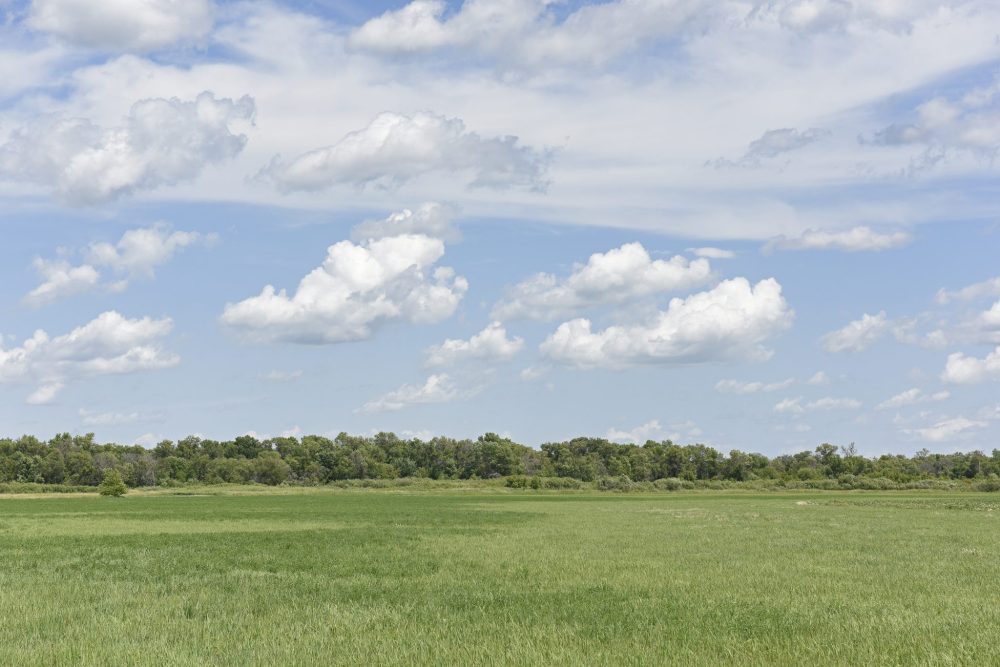
The alternative land use program came into being in 2019 and since then there have been five farms that have participated.
“We never had this type of programing before where we can offer producers the opportunity to change their management practices or what they’re doing on the land. That first year we put $80,000 to do that and to do about 60 to 100 acres put in,” said Pankiw.
The farmer cuts the grass once a year after any wildlife has moved out from the area and Pankiw said so far the program has been a success. Since 2019 they’ve put 400 acres in the district back into perennial grasses and natural flood plains. The contract for the grass project is for 10 years with the option to renew for another 10 years.
Another example of the program is a farmer who let his neighbours’ fields drain into a portion of his land which drains into the Red River. The SRRWD has established about 70 acres of perennial grasses on this land.
Pankiw said the producers wins with making his land a flood plain and being subsided because he’s guaranteed money per acre whereas the land might not be profitable for crops some years due to flooding.
“The people we’ve done it with have been very happy with it. It’s very easy to do and it’s low management. It kind of takes some stress off in the springtime you don’t have to come back and plant something a month later after it’s dried up,” said Pankiw, adding it’s a great program for farmers where drainage is not an option or in lieu of drainage.
Pankiw said the program takes marginal pieces of land that are less productive economically, but are very productive ecologically by creating habitat and controlling water during flooding.
He said the process for applying for the program is simple with not a lot of paperwork. He said farmers have control of where they want to plant the perennial grasses.
“They can determine where on their land they want to put these projects. They can go out there with their seeder and seed exactly where they want. We don’t tell them this is the exact location. If you want to plant a few extra acres outside of the low-lying areas to make it easier for you to get in there with your air seeder or farm equipment (you can). We really try to make this a farm friendly program.”