
COLUMN: Carillon Flashback October 24, 1946 – Fur farms are significant in Southeastern Manitoba
Advertisement
When people think of the animals on the farm, dairy and beef cattle, pigs, chickens and sheep come to mind. But there was a time when mink and foxes were just as important to many a farmer in the Southeast. In 1946, William P. Wiebe, who managed a fur farm in Steinbach’s east end, provided The Carillon News with an up-to-date report on the industry at that time.
Fur farming is a highly specialized industry, Wiebe said, and fur farmers get out of it only what they put in.
In southeastern Manitoba, the raising of fur-bearing animals is steadily gaining in importance, and at present it is estimated that approximately $175,000 worth of pelts are sold annually. Then there is also the revenue from breeding stock that is being sold by some of the top-notch fur ranchers. Breeding animals, of course, nets owners many times as much income as the marketing of pelts.
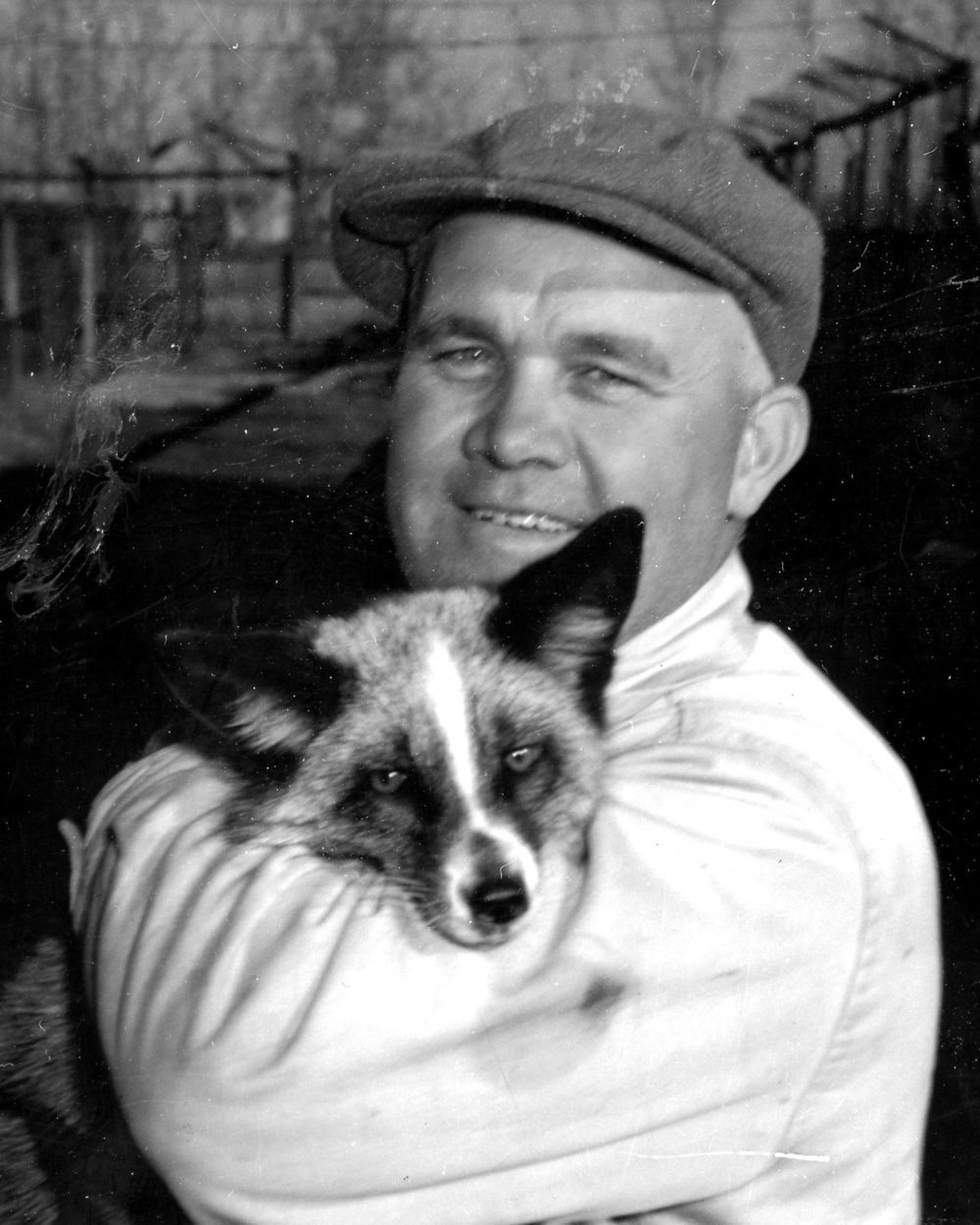
The gestation period for minks is 40 to 73 days, so minks increase on an average of 3½ times a year; foxes don’t do quite as well, but breeding stock outstrips income from fox pelts as well.
There are at least 30 fur farms here in southeastern Manitoba, and the number of animals kept on different farms varies from 25 to 1,500. Fur bearers are husky eaters, even in captivity, so a good sized mink ranch requires about 125 old horses, in addition to other delicacies that go into the meat mixture fed to mink and foxes.
Minks are also fierce fighters, and when they tangle, it’s a case of the survival of the fittest, unless the caretaker comes around in time. Even if separated, surgery may be necessary, as a severely lacerated paw, leg or tail has to be amputated. This is all part of the fur rancher’s daily routine, which includes administering remedies for worms, ear mites and fleas. In general, mink are not so susceptible to disease as foxes and may be easier to raise, Wiebe explains.
Contrary to general belief, visitors are welcome to visit fur farms, or if you prefer ranches, with the exception of mating and whelping time. At those times, animals are high strung, and will kill their young if excited in any way. It is so particular, in fact, that an experienced fur rancher will wear the same clothes day after day in order that the fur bearers may not be disturbed by a new smell or a different appearance. For this reason, visitors should not be offended if, at some time of the year, they are not allowed to visit an area fur farm.
The bulk of fur farming in the Southeast is, at present, being carried on by half a dozen operators in the St Pierre-Otterburne districts. Some specialize in various strains of animals, and J.L. Tessier at St Pierre, has developed a very nice stock of the Gauthier strain mink. He has 4,000 foxes and 400 mink. J.A. Joubert, also of St Pierre, goes in more for foxes, and his Royal Blue Fur Farm has produced pelts that have brought as much as $150 apiece. Joubert keeps about 250 foxes and 400 mink.
J.A. Couture, owner of the St Pierre Silver Fox Farm, is a pioneer in the fur farming industry, starting with silver foxes way back in 1923. According to reports, his was the first fur farm in the district. (The St Pierre fox and mink farm may well have also been the last, for it was still in operation in 1970, when most fur farms had been out of business for years.) Couture’s own strain of foxes is known as the “All-best”, but he also raises Standard Silver, White Face, Platinums, and is now beginning with Pearl Platinum foxes.
Couture is also Managing Director of the Western Canada Fur Pool, an organization through which many sell their furs.
In St Malo, there is the Peloquin Fur Farm and Niverville district boasts five fur farms: Two are owned by the Peter Loeppkys, while Jack Stott, Abe Loeppky and Jim Kreibuch have the other three.
Kleefeld Top Fur Farm, owned by Harry Topnick, has about 325 foxes and 175 mink. At present, he is experimenting with breeding and crossing wild mink.
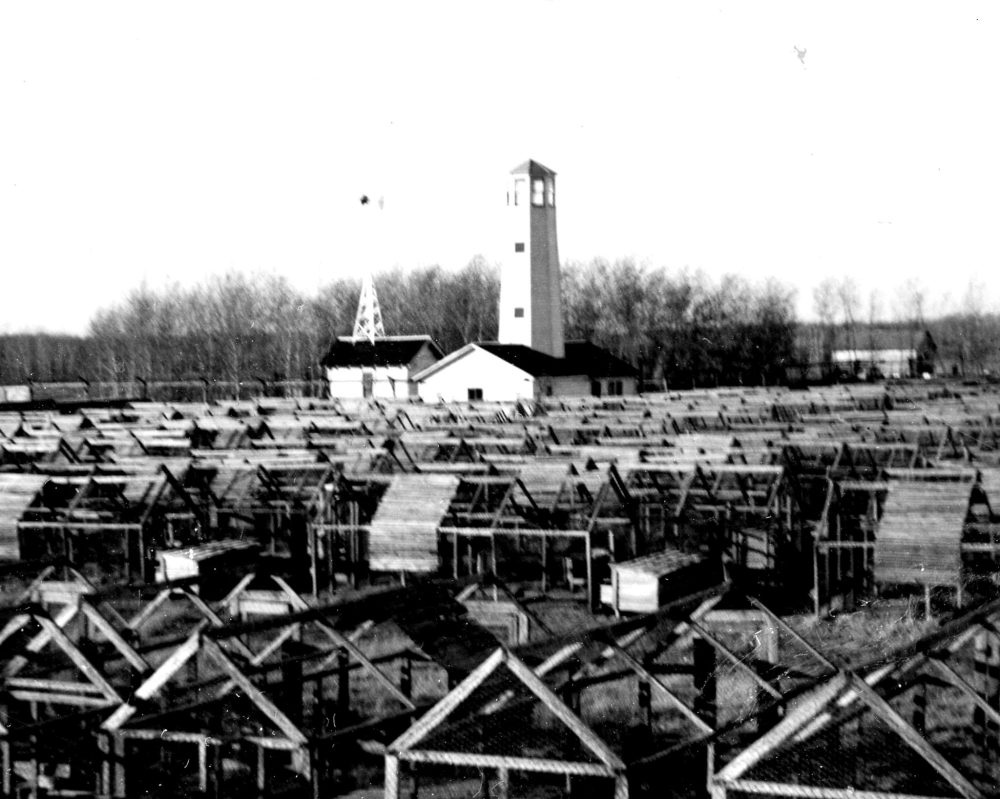
Steinbach district is beginning to realize the possibilities in raising fur bearers, and here there are a number of relatively new fur farms. J.P. Harder, Unrau Brothers, Pete Peters, Abraham. Dueck, Herb Barkman, and Jake Sawatzky are the latest to get into the fur business.
Two longer established concerns in this district are the Stony Brook Fur Farm, started by J.R. Friesen in 1932, and the Hanover Silver Fox Farm, which was started two years later by J.S. Rempel and B.P. Janz.
J.R. Friesen established Stony Brook Fur Farm with a small number of animals of his own, but he took in “boarders” and was breeding animals purchased by people who were looking for additional income, but did not have the time or otherwise were not interested in fur farming on a larger scale. In this manner, most of the newer fur farms of this district get their breeding stock, Wiebe says.
Stony Brook, today, has over 900 animals, and is concentrating on breeding stock. Last year, this company purchased two male Koh-I-Nur (Black Cross) mink at $350 apiece and several male Silver Blue mink at $200 each. Some kits from this pure strain are now being sold for breeding purposes.
Another pioneer fur farm is located at Giroux, where J.J. Thiessen started with mink in 1924. At that time, there were only two mink farms in the entire province of Manitoba. Thiessen had never seen a mink before he bought his first breeding stock, but now the Thiessen strain of mink can be found on practically all fur farms in the community and is familiar all across Canada. He has taken many first prizes at the Winnipeg Fur Show and is continually introducing new strains. The Thiessen Fur Farm has about 650 mink.