
Cereals Canada at home in Winnipeg high rise
Advertisement
Hey there, time traveller!
This article was published 10/10/2022 (1353 days ago), so information in it may no longer be current.
Canada’s agriculture minister, members of the media and a number of international wheat customers were invited to “sip, slurp, slice and stuff’ as they helped Cereals Canada celebrate its 50th anniversary at its headquarters, high above the bustle of traffic at the corner of Portage and Main street in Winnipeg.
Canada’s Minister of Agriculture and Agri-Food, Marie-Claude Bibeau attended the event, and along with several international wheat customers toured the flour mill, bakery, brewery and pasta plant, which are all part of this hidden gem in the heart of Winnipeg.
Over the past 50 years, more than 51,000 people from over 55 countries have attended courses, webinars, training programs and in-country seminars, hosted by Cereals Canada in Winnipeg and around the world.

Cereals Canada CEO Dean Dias says when it comes to supplying countries with the technical support for using Canadian cereals in staple foods like bread, pasta, and noodles, Cereals Canada staff are the experts.
“Canadian agriculture provides consistent, sustainable, high-quality wheat, barley and oats to help support food security, here at home and around the globe.”
To help demonstrate that expertise, Cereals Canada has several technical areas that include lab-scale and pilot-scale commercial processing equipment at its Winnipeg headquarters.
Just steps from Portage and Main, this hidden gem in the heart of the city is home to a flour mill; a bakery; and noodle, pasta, and analytical laboratories. As well, the Canadian Malt Barley Technical Centre (CMBTC) has a malting facility and state-of-the-art 250L pilot brewery on site.
The Cereals Canada pilot flour mill is equipped with the gold standard in milling equipment, and is able to recreate these same conditions in mills around the world, to help millers get the most from Canadian wheat.
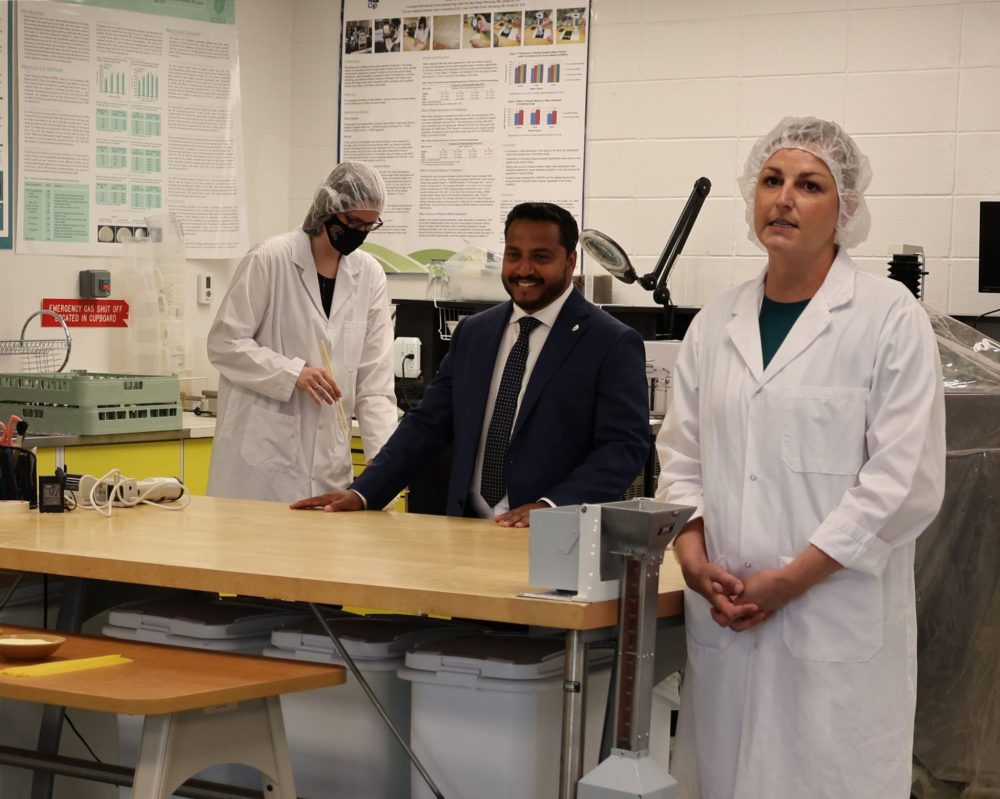
Nowhere else in Canada is there a working flour mill to be found in a busy high-rise.
The same could be said of the Cereals Canada noodles and pasta operation. Staff are working with Canadian wheat on pilot-scale equipment to create commercial quality instant noodles and pasta, 11 floors above Portage and Main.
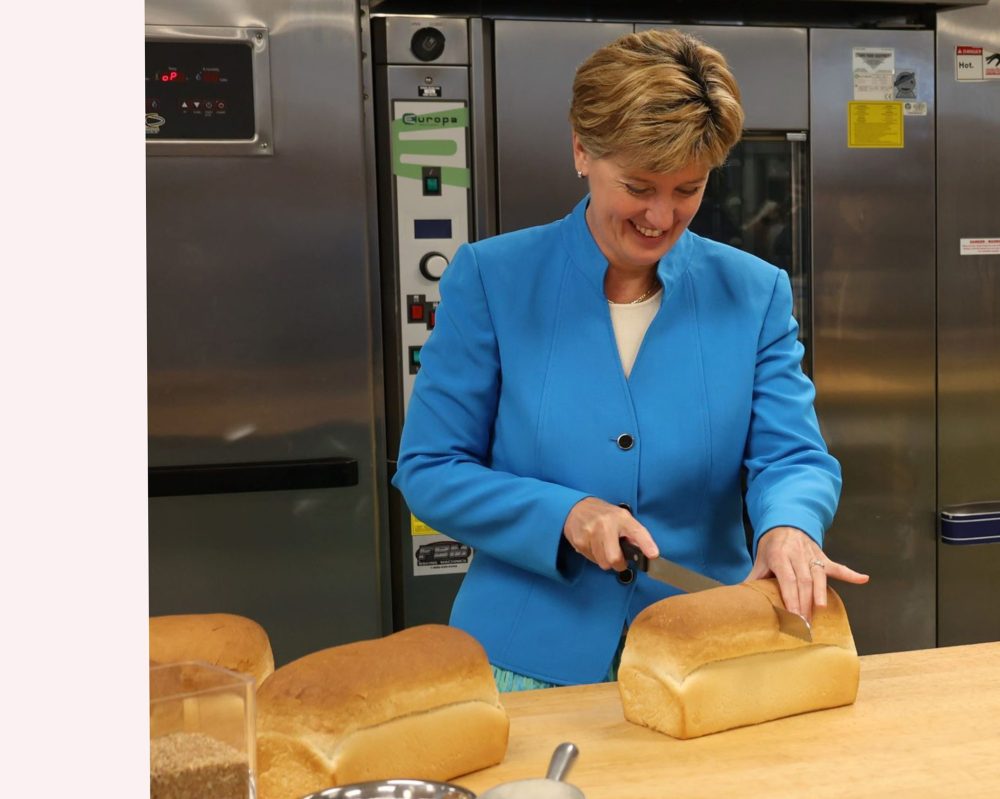
Commercial bakers around the world turn to the experts at Cereals Canada to understand and use Canadian wheat in their recipes. The pilot-scale bakery mirrors the equipment and conditions in commercial bakeries, and produces hundreds of loaves of perfect pan bread every year.
Dias told guests at the July event, there was no better way to celebrate Cereal Canada’s 50th anniversary than to have Agriculture Minister Bibeau slice a freshly baked loaf of bread made on the premises from Canada’s excellent wheat.
“Some organizations cut ribbons to celebrate, here at Cereals Canada, we slice bread.”
The organization was founded in 1972 as the Canadian International Grains Institute (CIGI), a not-for-profit institute, providing pre-market and in-market technical support for the Canadian grain sector.
In 2020, CIGI merged with Cereals Canada, a collaboration of partners from all sectors of the cereals value chain dedicated to enhancing the domestic and international competitiveness of the Canadian cereals industries. Operating under the name Cereals Canada, the non-profit organization supports all aspects of the Canadian cereals industry, including farmers, exporters, developers, processors, and customers around the world, focusing on trade, science and sustainability.
With a global reputation for quality and consistency, Canada ships wheat, barley and oats around the world to over 84 countries, returning $9.9 billion annually of export revenue to the economy.
Minister Bibeau said this is in part due to the work by Cereals Canada over the last 50 years.
“Canada is known internationally for its high-quality wheat and cereals grown on over 52,000 farms across the country.”
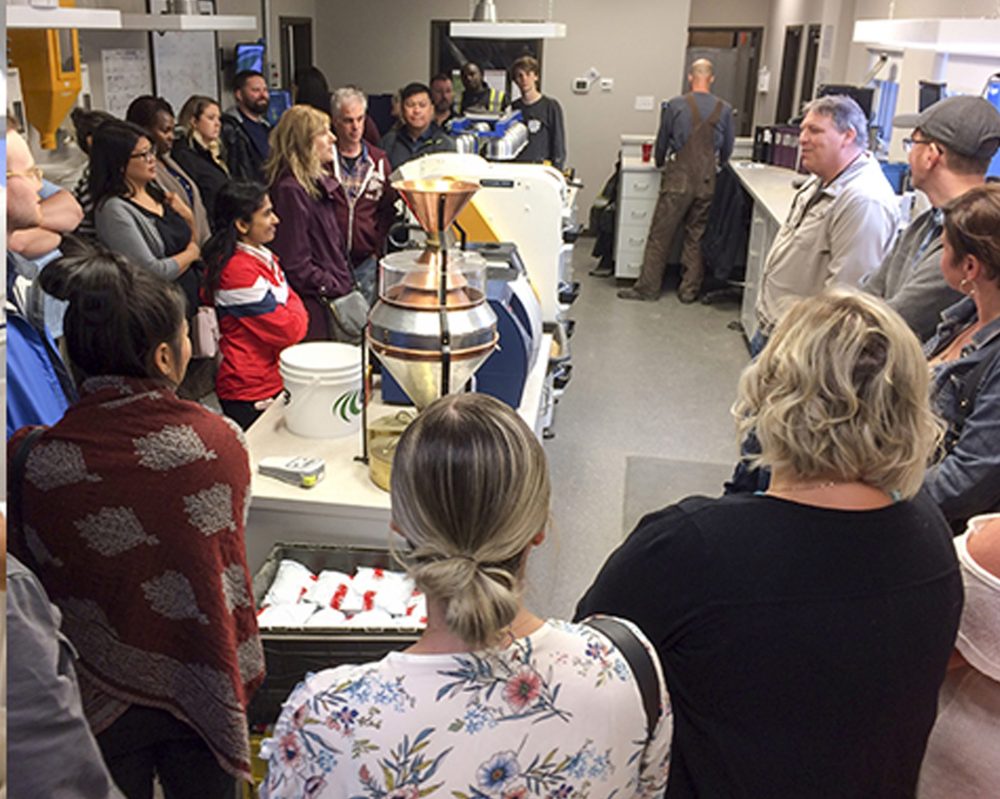
Canadian agriculture, Cereals Canada, and the federal government all have an important role to play in supporting countries and their food security, Dias added.
“Through science, innovation, market access, customer training, and the entire value chain working together, Canada can continue to grow safe, reliable, quality wheat, barley and oats.”