AITC back in the classroom after interruption by COVID
Advertisement
Hey there, time traveller!
This article was published 23/04/2023 (1155 days ago), so information in it may no longer be current.
A group of Grades 3 and 4 students at Highbury School followed the food from the farm to their plate, and at the same time picked up valuable information about efforts to minimize food waste being made at each step along the way, as Agriculture in the Classroom presented its annual Canadian Agriculture Literacy Month program for thousands of Manitoba students.
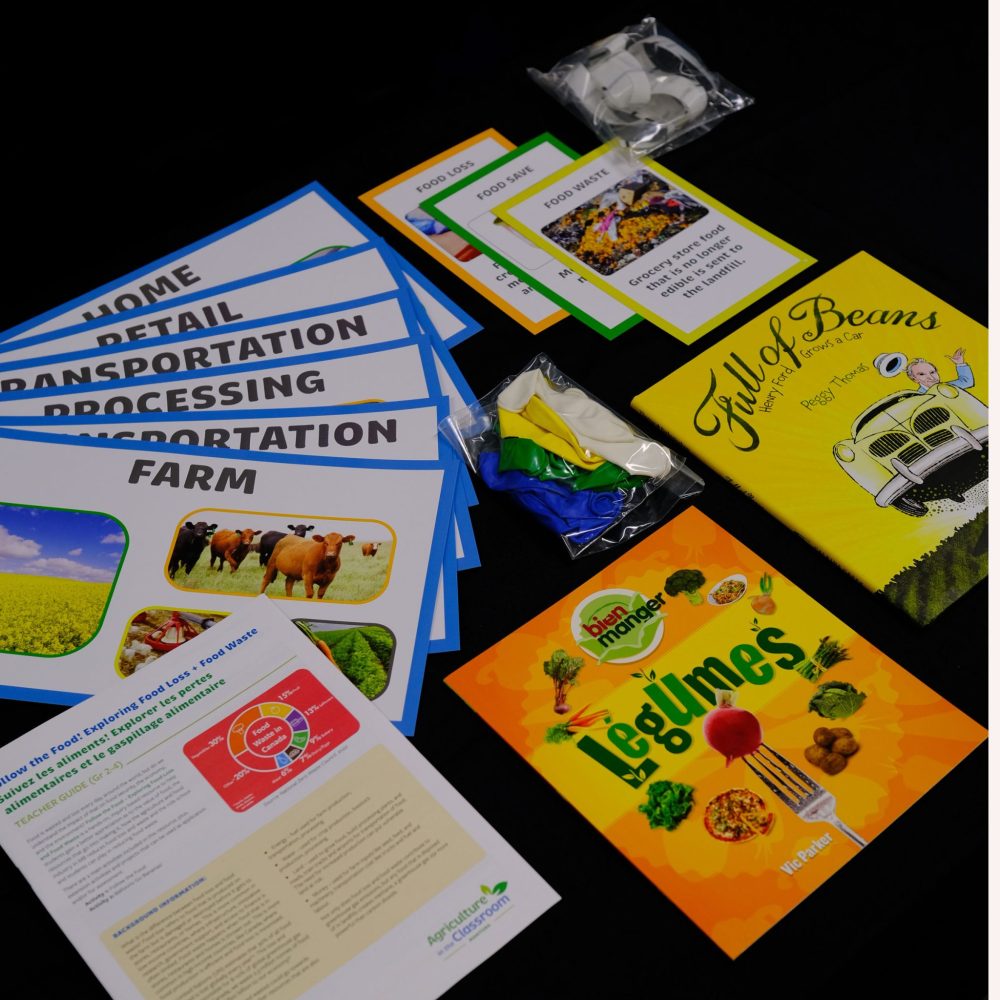
This year, 150 agriculture industry volunteers will visit 332 classrooms across the province, bringing their own agricultural experiences, along with an agricultural-themed book and hands-on activities to students in Grade 2-4.
This year’s CALM focus in Manitoba is on “Food Loss and Waste” and students will learn how the ag industry works to limit food loss, and how everyone can help to reduce food waste.
After two years of virtual programming due to the pandemic, there’s no sweeter feeling than returning to in-person classroom visits this year, says Katharine Cherewyk, Executive Director of Agriculture in the Classroom-Manitoba.
“It’s critical for our future generation to be connected to their food and who produces it. CALM is an amazing opportunity for that to happen, especially when those connections are made in-person.”
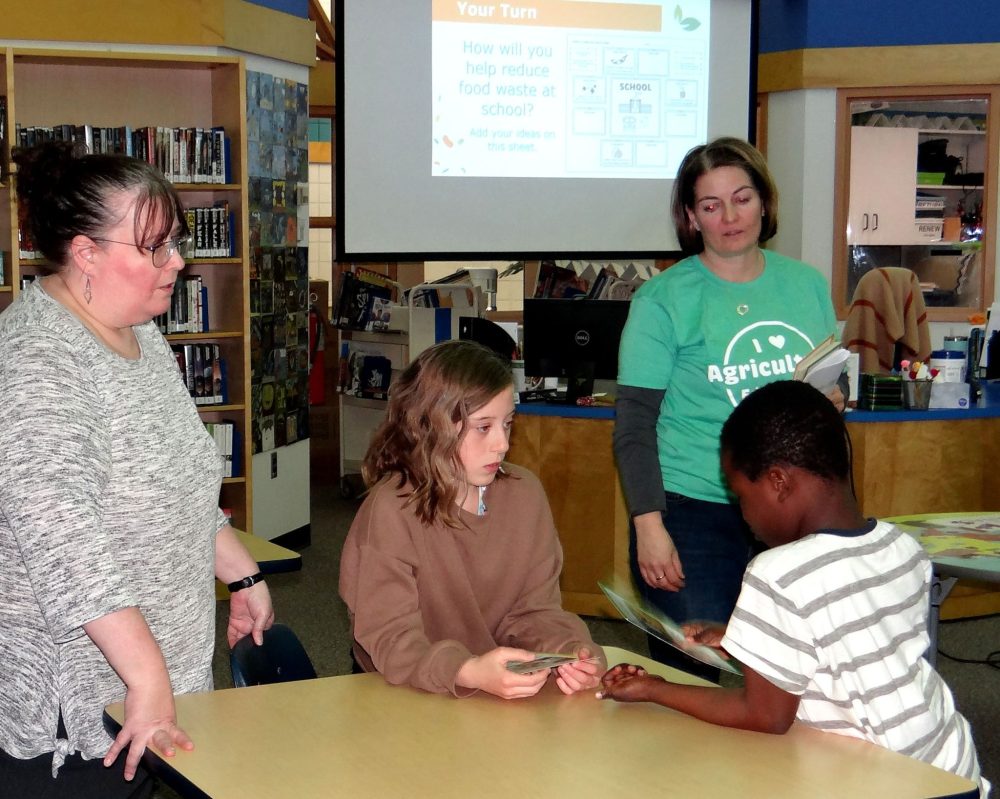
Val Weeks, a field supervisor for Manitoba Chicken Farmers, visited Dawn Farrant’s grade three-four class at Highbury School in Winnipeg and showed students slides of different poultry operations and photos of day old chicks and full-grown broiler chickens. She fielded questions, and led groups through an exercise, matching cards to identify where food loss could occur and ways of saving food in each of the steps from production, to processing, to grocery stores, to the dining room table.
Weeks talked about her experience growing up on a farm and explained that her job now was to visit multiple farms regularly, making sure rules are followed and the chickens are as comfortable as possible. She fills out a report card, but there aren’t any big problems because farmers know there will be consequences if they don’t follow the rules and get a bad report. A round of questions showed this Grade 3-4 class was pretty much aware of where their food came from, and a chorus of loud NO’s greeted Weeks’ question of whether chocolate milk came from brown cows. At the same time, the group knew that brown eggs did not necessarily just come from brown chickens and white chickens may lay not only white eggs.
All hands went up when Weeks asked, “Who eats chicken?”
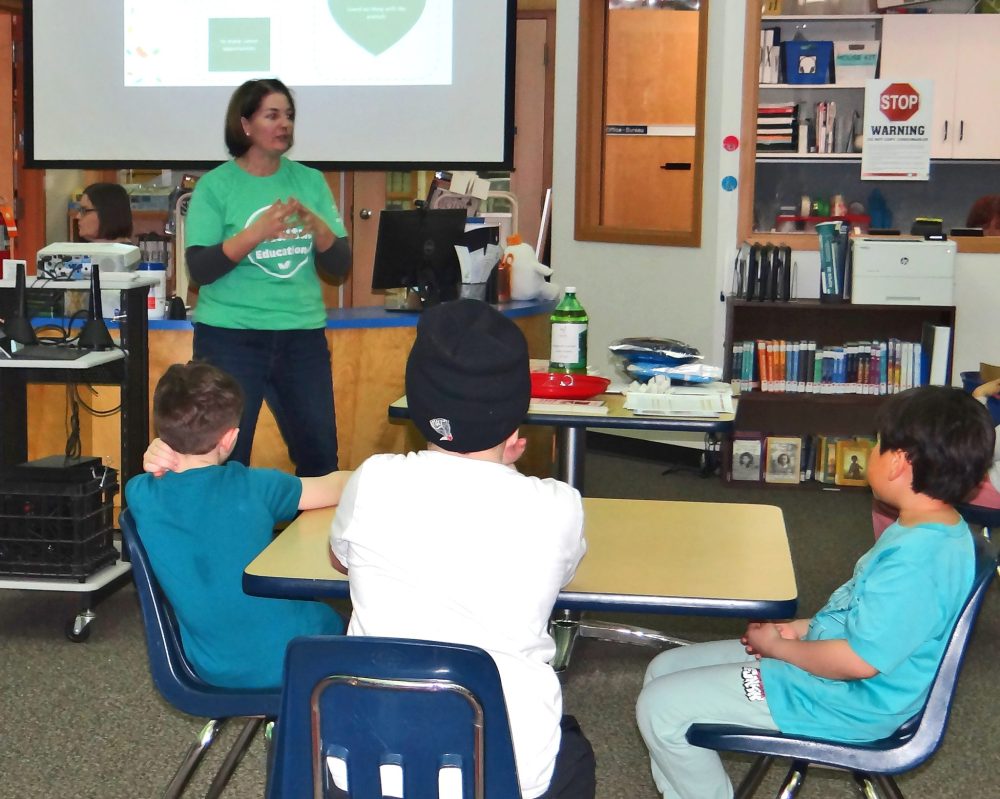
She explained to students that the chicken they eat comes from eggs laid in a breeder barn where there are roosters and hens. Different barns produce different eggs, she said.
“Eggs you eat are laid in barns where hens live all by themselves, no roosters, so no fertilized eggs and no chicks to hatch.”
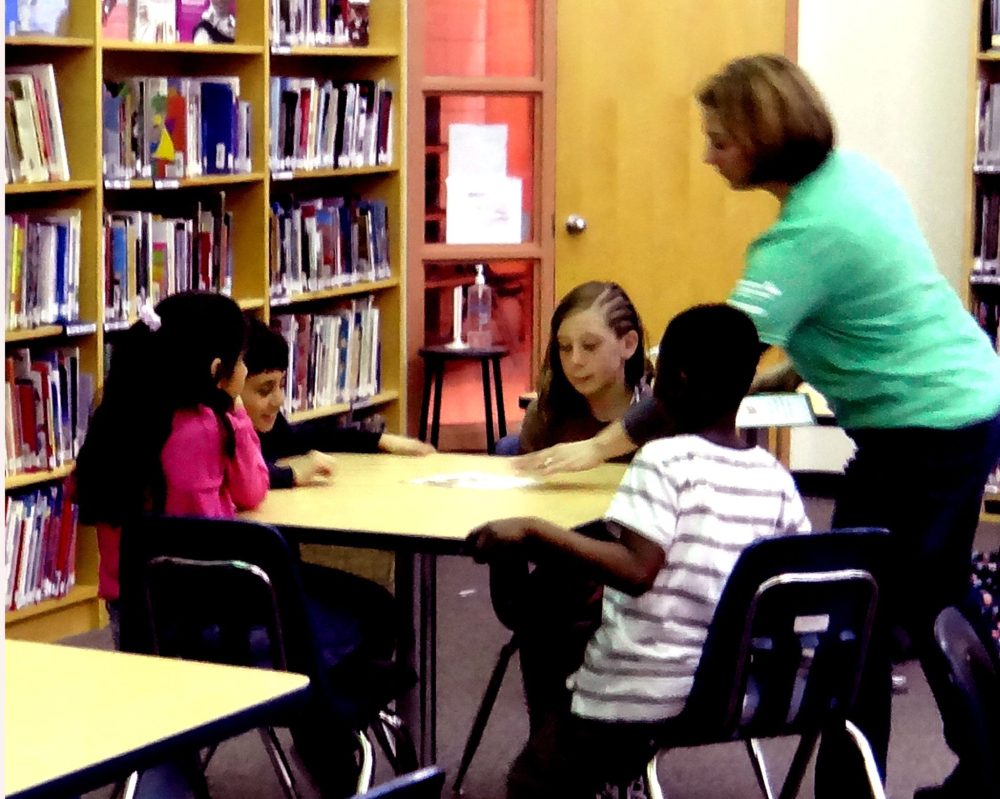
Students were split into groups for an activity exploring “Food Loss, Food Save, Food Waste.”
A series of mini-posters with examples of how to save food and limit waste on the farm, during transportation, at the processors, at the grocery store, and at home, were matched with each of the categories as the students learned of steps being taken to cut down on the huge quantity of food that ends up in the landfill.
On the farm for example, food is lost when insects or disease damage a crop. Manitoba farmers use a pesticide to protect the crop. In transportation, food loss occurs because of high temperatures, which causes food to spoil on the way to market. Steps are taken to make sure food is transported in containers that are kept at a safe temperature.
Badly packaged foods spoil and must be thrown away, students were told. So processors must follow strict rules to make sure there is safe packaging. At the grocery store, foods are thrown out once the “best before” date is passed. When food approaches that date, prices are lowered so the food will sell more quickly. At home, a package of ground beef will be thrown out when it reaches the expiry date, but before that happens, a great deal of meat can be saved if it is cooked, refrigerated and eaten within two to four days, or frozen.
As part of a somewhat chaotic activity, students with “Food Save” or “Food Loss” cards, scrambled to join students holding up transportation, processing, retail and home posters.
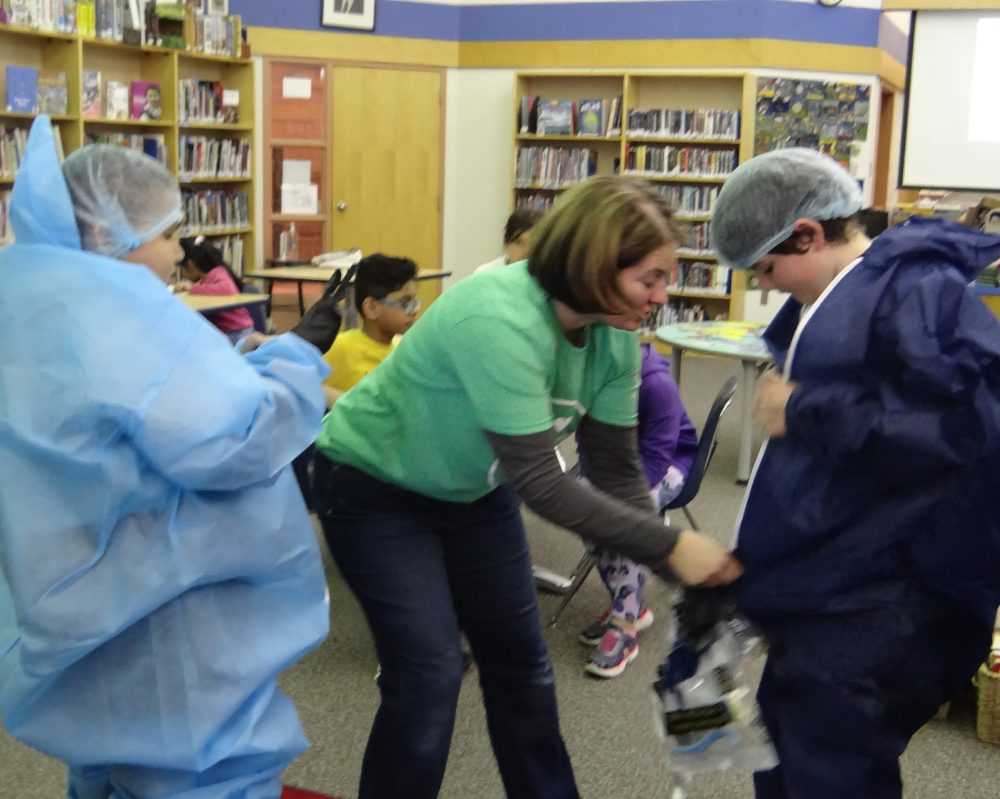
The highlight of the afternoon for two Highbury students was being decked out in the plastic safety gear people must wear when entering a chicken barn. Plastic boots, coveralls and gloves transformed the boys into a couple of Sumo wrestlers, to the delight of classmates.
“We want programs like CALM to be high-quality, fun and educational as they tell the story of where our food comes from,” says Cherewyk. “We’re humbled that so many incredible volunteers and teachers share that vision with us and are participating in CALM. Together, we’re all committed to ensuring a diverse Manitoba agricultural industry is valued now and in the future.”
Manitoba Agriculture Minister Derek Johnson says that the Agriculture in the Classroom returning to classrooms provides a valuable opportunity for Manitoba students to see where their food comes from, and hear from those who produce it.
“Thanks to Agriculture in the Classroom-Manitoba and the many volunteers in the agriculture industry, students will be provided a visit and an activity that can leave a lasting impression and inspire them to think about agriculture and its importance to our province.”