
COLUMN: Carillon Flashback December 5, 2013 – Downtown dairy barn is Penfor Construction gem
Advertisement
It is not often an agricultural construction company is afforded the opportunity to build a huge dairy barn in the midst of a city. It is even rarer an opportunity to be able to install all the bells and whistles in that barn and then have the general public view your work on a daily basis.
But cows downtown, 100 of them, are being pampered and studied at the new Rayner Research Centre barn, built on the campus of the University of Saskatoon by Penfor, the construction arm of the Blumenort-based Penner Farm Services.
Penfor began work on the $11.5 million project in February of 2012, and by June of 2013, construction of the 60,000 square-foot facility was in the main part completed.
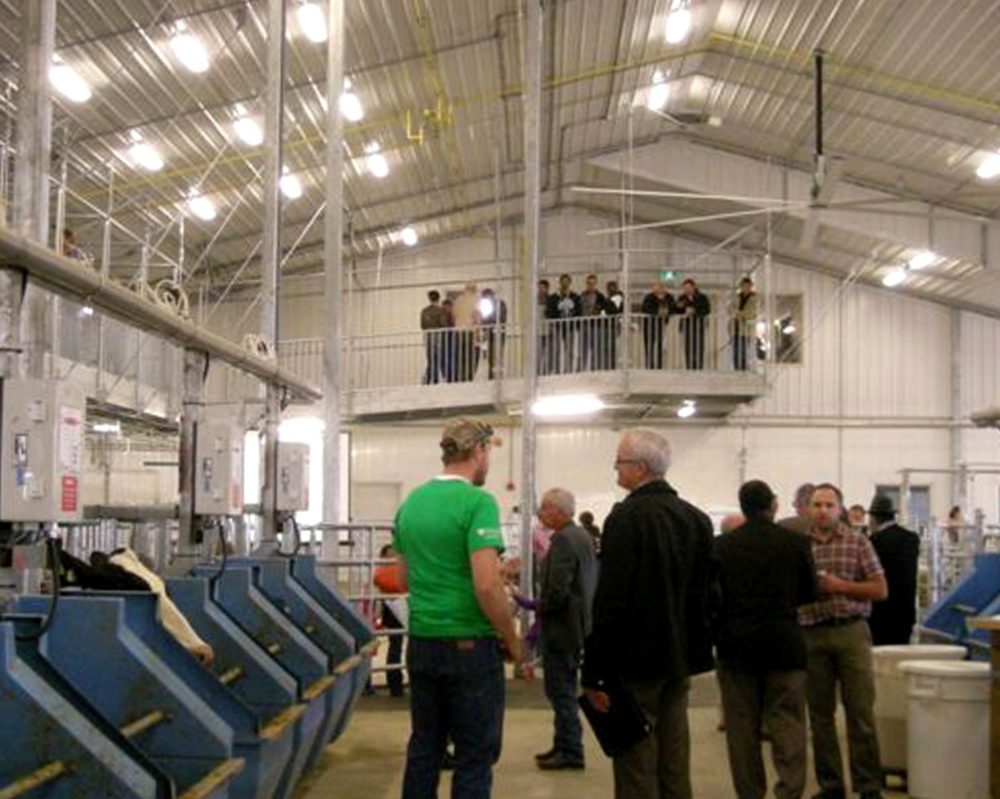
Project manager Ron Dick said because the barn is a research facility, each area had its own challenges and there was a lot of variation in design for different parts of the structure. The project involved three different milking systems under one roof, involving all areas of Penfor’s expertise at the same time.
Each area has its own ventilation system and concrete work was completed in smaller increments due to the differences in design for different parts of the building.
The walls at the Rayner Research Centre are of a design that incorporates a poured concrete core, using a hollow insulated form, which provides a complete finish both inside and out.
Construction costs were also increased because of the nature of the project, and although this may not have been the largest dairy barn their company has ever built, it certainly is the most expensive per square foot, according to Penfor manager Rudy Dyck.
And the same may well be said when it comes to operation of the research centre, which replaces an aging structure on the Saskatoon campus.
A commercial dairy barn of this size would house triple the number of cows and there wouldn’t be the large number of feed testing portals and other research tools that are part and parcel of the state-of-the-art equipment featured in this research facility.
All the attention to detail required the input of several levels of government and corporate partners in the planning and funding. It took months to put the finishing touches to the project. An open house, originally planned for April, was delayed several times until it was finally held the day after Thanksgiving in October.
A couple of hundred invited dignitaries, guests of the University of Saskatoon, got to tour the facility and get a close up look at how dairy research there has moved, almost overnight, into the 21st century.
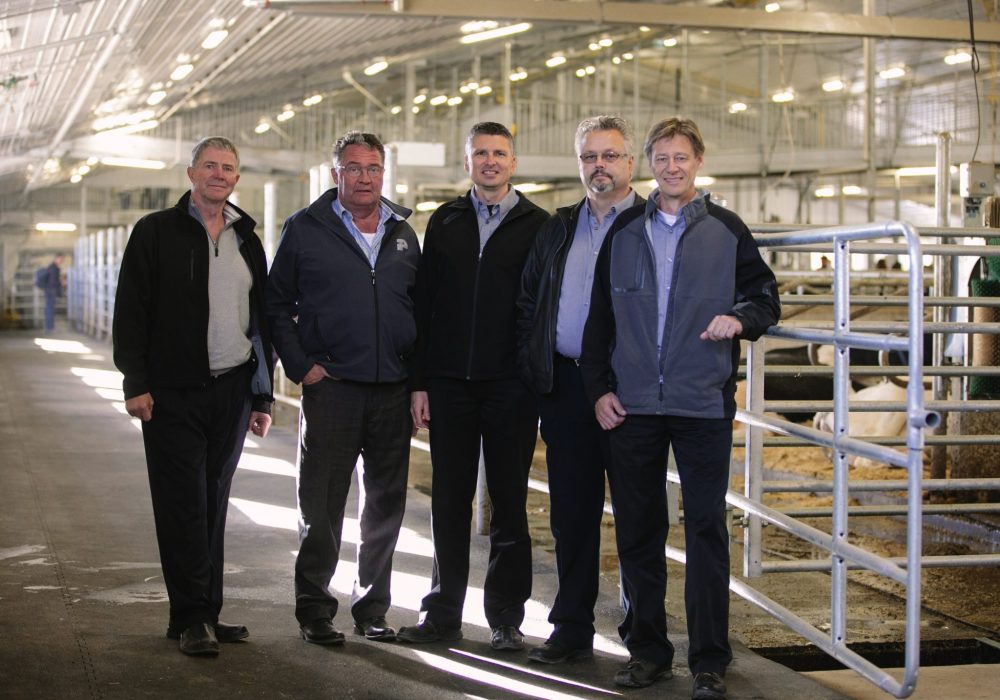
Included guests for the Oct. 15, 2013 open house were the Penner brothers, Reg and Darrel, and their Penfor Construction project team of Rudy Dyck, Dave Williams and Ron Dick.
For Dave Williams, the open house was a celebration of the completion of a project that required a year-and-a-half of total commitment on his part. Williams practically lived at the Saskatoon site since construction started in February of 2012. The on-site supervisor for Penfor spent most of his time in Saskatoon for the duration of the project, flying home for most weekends.
Penfor Construction was awarded the $8 million building construction phase of the project with Saskatchewan companies providing equipment for all facets of the dairy research program to be carried out there, Dyck explained.
Spacious quarters for 100 cows
The Rayner Research Centre houses the entire University of Saskatoon dairy herd, which will be expanded to 100 cows by the end of the year. The facility offers superior animal handling spaces, as well as a computerized feeder system for real-time monitoring of on-demand feeding.
In both the conventional parlor and the milking robot, milk production data for each cow is collected automatically.
The barn is also equipped with self-activated grooming brushes, not only for the comfort of the cows, but to advance research into how animals cope with stress.
The interpretive galleries of the Rayner Research Centre provide a way for visitors to explore the agricultural story of Saskatchewan and its role in global food production.
The dairy barn features an overhead walkway, giving visitors a bird’s-eye view of the herd, the milking parlor and the computerized milking robot.
Ron Dick and Rudy Dyck agree the catwalk is the outstanding feature in the barn and is what makes it such a valuable research facility, accommodating full classes of students monitoring every aspect of dairy operations and giving the public access to an interpretive centre at the same time.
Saskatchewan Agriculture Minister Lyle Stewart told the open house that this modern facility showcased agriculture technology and gave the public an opportunity to see the dairy industry.
The Feeding the World interpretive galleries play an important role in educating youth about agriculture and are open to the public from noon to 4:30 p.m. daily for self-guided tours.
When the construction project was first announced a year ago, Jack Ford, chair of the research committee of the Saskatchewan Milk Marketing Board, noted the importance of the location on the university campus and also the importance of education for the general public.
“At least 5,000 students per year can have a bird’s-eye view from the public gallery, and a major benefit will be how the public views agriculture. If we can show how to have a 100-cow facility in the middle of a city of 250,000 people, it really helps agriculture across the province.”
Next city project closer to home
While Penfor has earned its reputation as the premier builder of dairy barns through dozens of rural projects in the Southeast, occasionally they shift their focus to an urban project and commercial construction as well.
Such was the case when they submitted the winning bid for a long-awaited upgrade to the City of Steinbach’s operations building. An addition to the building is the next project on the go for Penfor, and while it may only be the size of the average dairy milking parlor, it carries a price tag of nearly $700,000.
But dairy is, of course, still a big part of what Penfor Construction does and with new construction comes new technology.
The latest innovation is the automated robotic Lely Vector feed kitchen to be installed in Welden Plett’s new dairy barn, two kilometers east of Blumenort.
The system has been tested in three barns in Canada, but the Lely Vector feed kitchen at Welden Plett’s dairy is the first commercially sold unit in North America.
The unique computerized system mixes and distributes specific rations to meet individual cow’s needs. An overhead crane in the “kitchen” delivers feed to a hopper on the robot, which in turn delivers it to specific areas of the feeding aisles, 24 hours a day.
Penfor is building the 50,000 square-foot barn, with a capacity of 240 lactating cows, to replace the barn the Pletts at Sunny Glade lost to a fire this spring.