
Research facilities closing raise concerns among MB farmers
Advertisement
Manitoba farmers and advocates are worried a slew of job cuts and farm research closures announced by Agriculture and Agri-Food Canada will drive food prices up and hinder advancements in food sciences.
Agriculture and Agri-Food Canada (AAFC) announced it would shut down seven research facilities across multiple provinces due to federal government cuts, in January 2026. In Manitoba, the Portage la Prairie research farm is closing down slowly. Around 665 jobs will be cut, according to their 2026-27 department plan.
Jennifer Seward, executive director at Manitoba Seed Growers Association, said the impacts are “overwhelming,” and ripple effects will show when “it’s too late.”
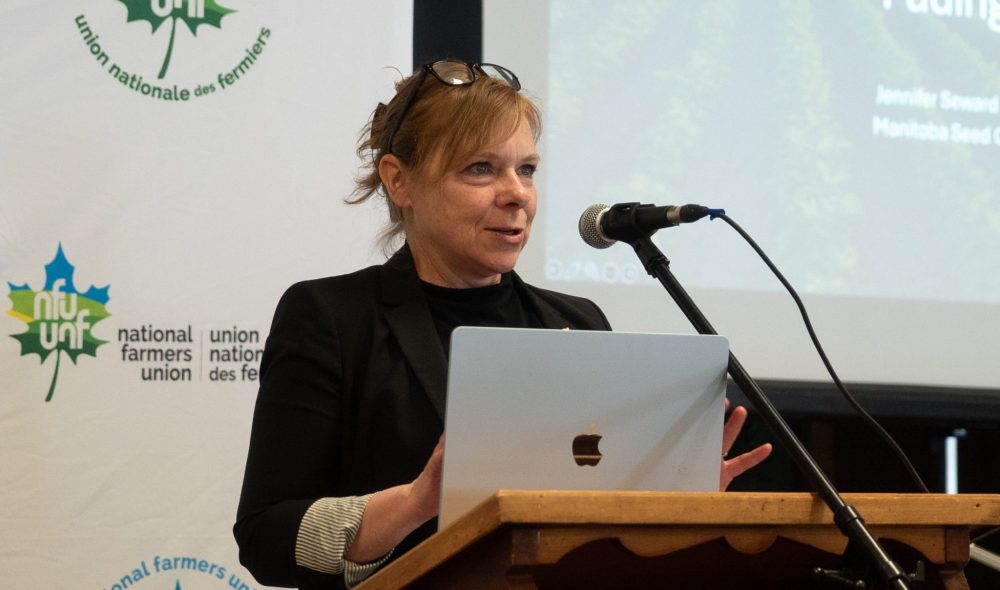
“It’s a huge deal. Consumers won’t care about it now because they won’t see an impact, but in 10 years, the food prices are going to go up more,” said Seward. “That’s because we won’t be ahead of disease cycles and the yield potential.”
She predicts genetic diversity for plants will be limited, Canada will fall behind global competitors when it comes to crop innovations, farmers will pay more for seeds which will include fewer disease resistant varieties, and food security will depend on private suppliers.
Research facilities look into enhancing a plant by giving it desirable traits like higher yield, taste, and disease resistance through crossing plants, which improves a farmer’s food security, choice, and crop diversity.
She said the work on sustainability, soil health and organic services were cut, so it’s going to impact the crops. Local plant variations need to be developed because every region has a different soil, climate, and market.
Seward said we won’t ever bounce back from the lost research facilities that took generations to build, adding that the expertise lost will result in Canada falling behind.
“It’s infrastructure that has taken generations to develop and build. To get it back, we just won’t ever. That’s the consequences of inaction,” she said.
Seward said the federal government needs to recommit to plant breeding which she said is just as important as National Defence.
The federal government announced it would spend over $35 million to fortify Canada’s North, according to a news release this month.
Communities have been decimated by these cuts. AAFC has good jobs and it’s very important for those small rural communities,” she said.
Jennifer Mitchell Fetch, a retired oat breeder at AAFC, has witnessed many cuts since she started in 1998.
“If the test hasn’t been growing near your farm, we can’t honestly say to you, this line will do great for you in your farm,” said Mitchell Fetch.
She said pathologists aren’t allowed to go and survey the country and identify diseases due to lack of funding. The pathologist would work with a breeder to find a breed to make a plant variety with some resistance to a specific issue.
“The whole time you’re working you’re trying to fight against management cutting back your program. Then you also have to worry about the environment,” said Mitchell Fetch.
The Brandon and Morden Research and Development Centres will still be open, and every province will continue to have at least one research centre, according to a spokesperson from AAFC.
The spokesperson said it’s too soon to say what the final number of jobs cut in Manitoba will be.