
From dairy to brewery, Blumstein Brewing Co. finds niche
Advertisement
Recreate a disused milking parlour, find a dedicated brewmaster who loves to come up with new recipes and add a pinch of Mennonite satire, and you have a recipe for success.
That’s what Milt Olfert and Mark Von Riesen are finding out after nearly two years of operating Blumstein Brewery Co. in the RM of Stanley between Morden and Winkler.
Their dedication to unique flavours and penchant for making light-hearted fun of Mennonite stereotypes have resulted in a line of beers rapidly gaining traction on Manitoba’s craft beer scene.
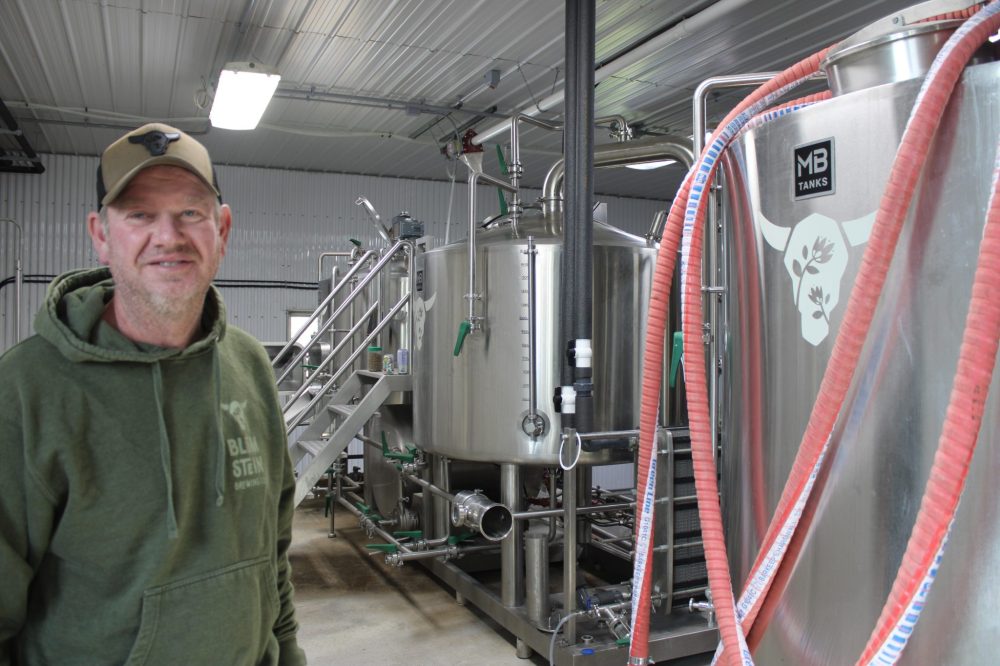
After all, according to their website, at the end of the day they’re “just a couple of Menno boys making beer.”
Even the name of the brewery is a homage to the history of the area.
Blumstein was the name given to a rural school district established in 1887.
That’s where the Olferts began their dairy farm.
“It is here where a dairy farm was built the Mennonite way – up at dawn, chores to do, cows to milk and feed, followed by more chores, and finally at the end of a hard day’s work one would open the secret cellar and crack open a cold beer, so long as no one else was looking,” the website states. “You wouldn’t dare get caught drinking or dancing on a Mennonite farm. Today, this dairy operation is now a craft beer brewing operation, no more hiding – unless of course you want to. Your secret’s safe with us.”
Because “blum” translates to flower and “stein” to stone, partners Olfert and Von Riesen chose a skull of a dairy cow inset with flowers as their logo.
“The dairy is dead,” Olfert said. “Now we have new flowers growing in the stone of the skull, bringing to life Blumstein Brewing Company.”
“The flowers on our skull and some of our cans were very common flowers that the Mennonites would often paint or stencil on their floors because they couldn’t afford flooring,” he said.
While their various flavours often offer satirical references to the Mennonite way of life, Olfert said they also wanted to educate.
“Both myself and Mark, being Mennonite boys, wanted to put our Mennonite heritage into our brand with a lot of satire,” he said.
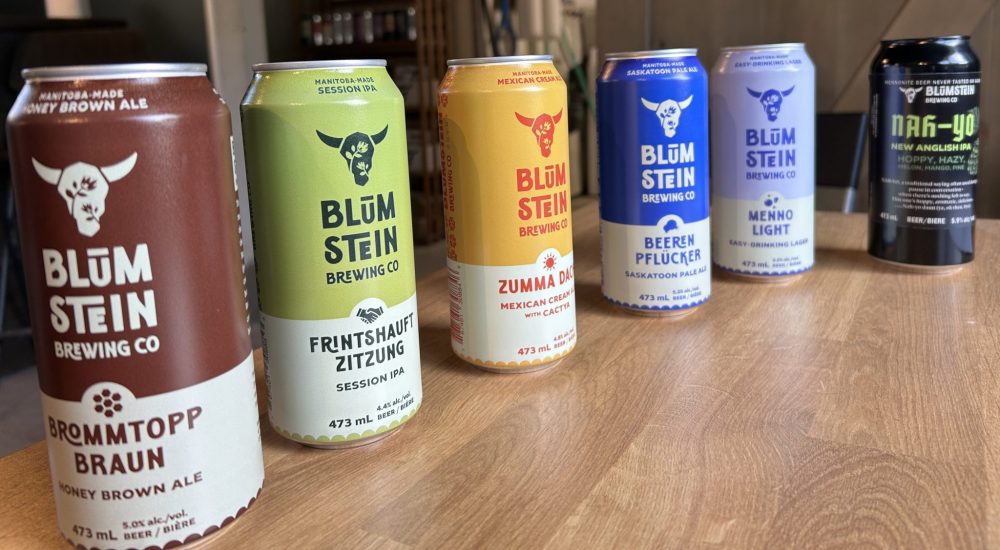
That’s made obvious by the first beer they brewed, and one of their top sellers called Zumma Dach, described as a Mexican cream ale with cactya. Translating to “summer day”, Zumma Dach “evokes the feeling of a hot day in Manitoba, and even hotter in Chihuahua, where some Mennonites settled in Mexico,” the description reads.
That beer is brewed with corn, citrus-forward hops and cactya, also known as soursop, a fruit native to Mexico.
Beeren Pflucker is the other most popular beer, described as a saskatoon pale ale.

The name translates to “berry pickers”.
Frintshauft Zitsung Session IPA translates to a social hangout or sit-down with friends, and they describe that experience “like sharing some easy-drinking IPA with the cousins between harvest loads while Onkel Jakob isn’t looking.”
“Some mild maltiness and grassy stone fruit hop flavours make this session IPA something you’ll want to keep going to back to, even against Tante Martha’s wishes,” the description concludes.
Additional flavours include the Brommtopp Braun Honey Brown Ale and the Menno Light Easy-drinking Lager.
The lager is described as “light, crisp and easier to swallow than a sermon on modesty.”
“Menno light won’t make you a Mennonite, but after a can or two, suspenders might start to seem practical and you’ll begin to wonder how to grow cucumbers in your condo,” it reads on the can.
Olfert made the decision to get out of the dairy business, but a brewery wasn’t on his mind at first.
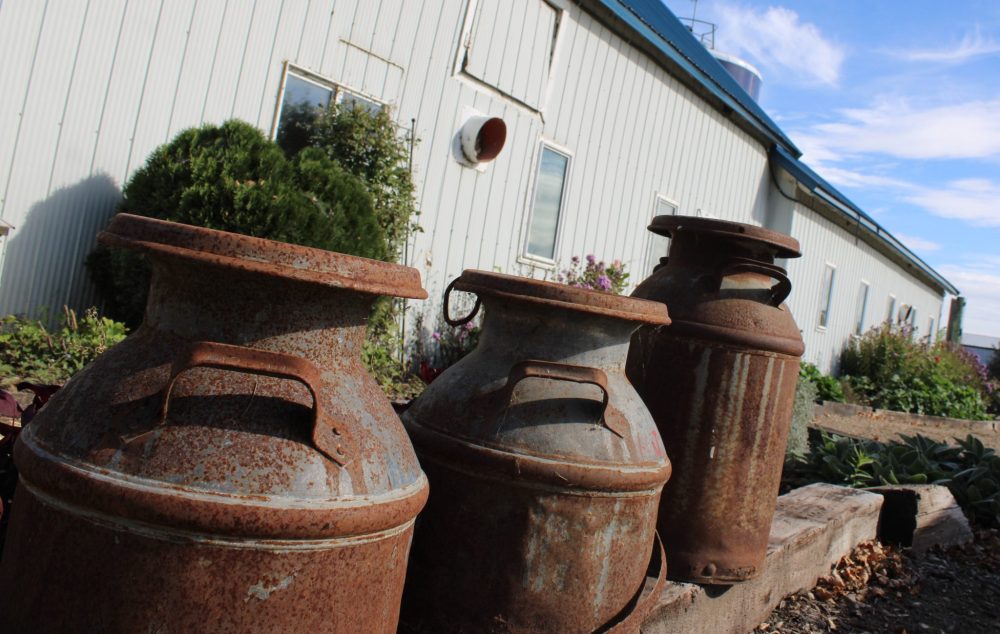
“I struggled for a while wondering what to do with this barn,” he said.
A mutual friend suggested he get together with Von Riesen who was one of the founders of Rendezvous Brewing, who had recently sold his shares.
The two put their heads together and came up with the brewery concept.
And while the physical changes were challenging, they paled in comparison to the complicated steps they had to go through to get their licence and approvals from various agencies.
Still, 11 months after beginning the process they were ready to begin.
Von Riesen is the brewmaster while Olfert said he focuses on the marketing and other tasks.
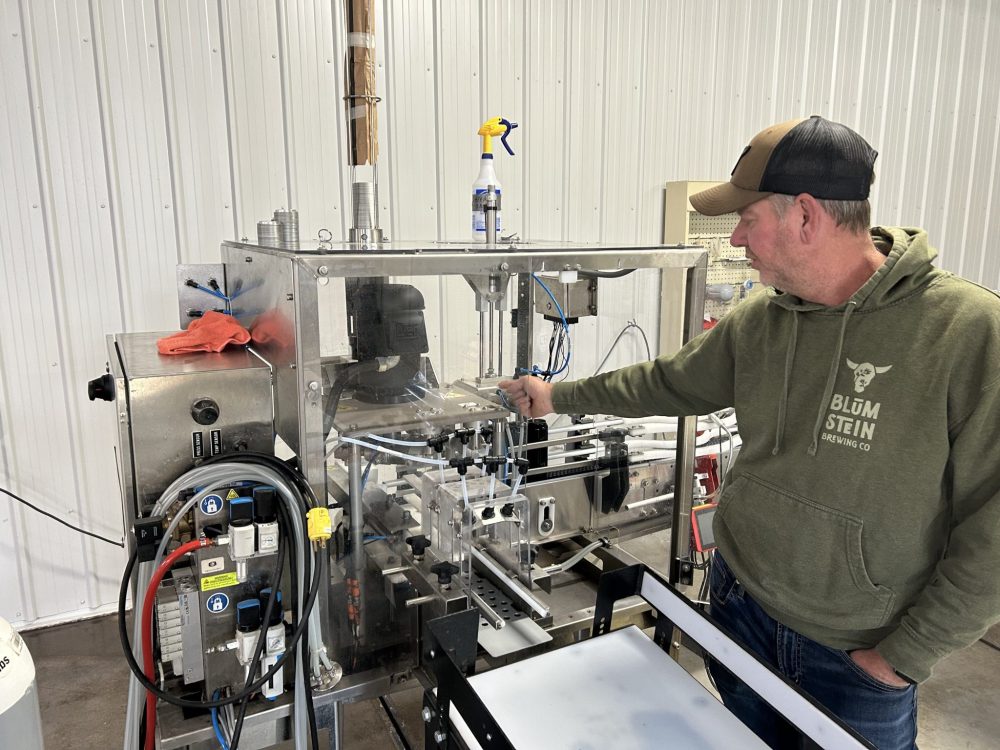
The pair tested their product on the Pembina Valley market, first having people over to the brewery and then starting sales in Winkler, Morden, Miami and Plum Coulee.
They’ve expanded since then to 17 locations, including Steinbach, St. Malo and Niverville in the Southeast as well as locations in Winnipeg, Wasagaming, and Onanole.
“If we stay under 20 locations we can choose where we go,” Olfert said. “Once we go over 20 locations we have to open up to the whole province and we don’t have enough production right now to do that.”
Olfert said they carefully choose locations where they expect to get repeat sales, where people will recognize and love the brand.
Considered small by micro-brewery standards, Olfert said they’re pleased with that status.
“That has kind of been our growth pattern, slow and steady,” he said. “Sometimes scarcity can be a good marketing tool too.”
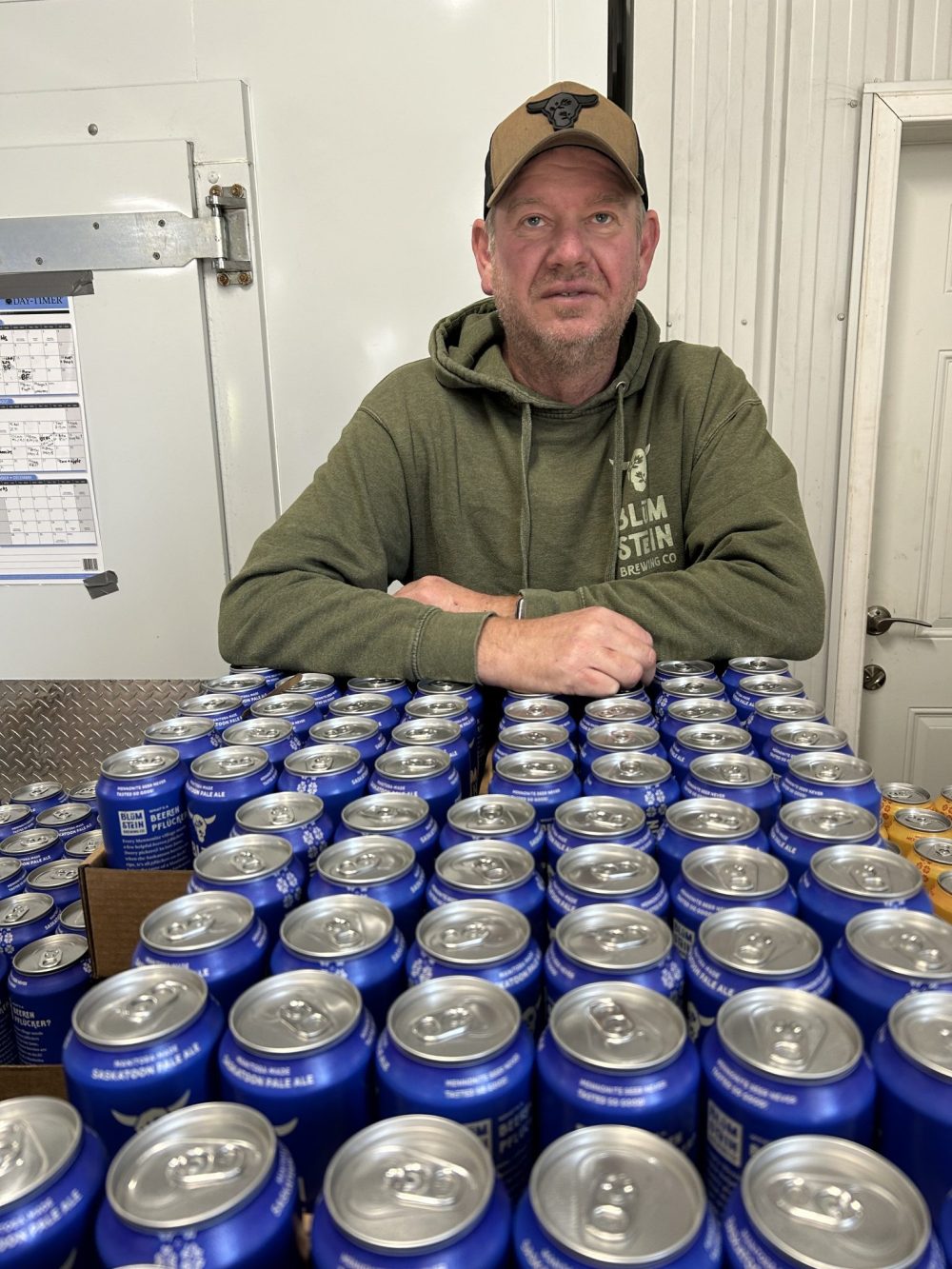
One brew equals about 2,200 litres of beer, something they try to do two or three times a month.
“Ultimately we’d like to get to four times a month, then we’d be at full capacity with our system,” he said.
Being small also gives them flexibility and the company often experiments with small batches or custom orders.
While he still farms about 600 acres, Olfert said not all their ingredients can be purchased or grown locally.
“This area, with our fertile soil, is hard to grow good malt barley,” he said. “You need a little bit more marginal land.”
That’s why they were pleased to discover Scythe Malting Co. in Springstein.
The best hops must come from overseas, but other ingredients are found on the same section.
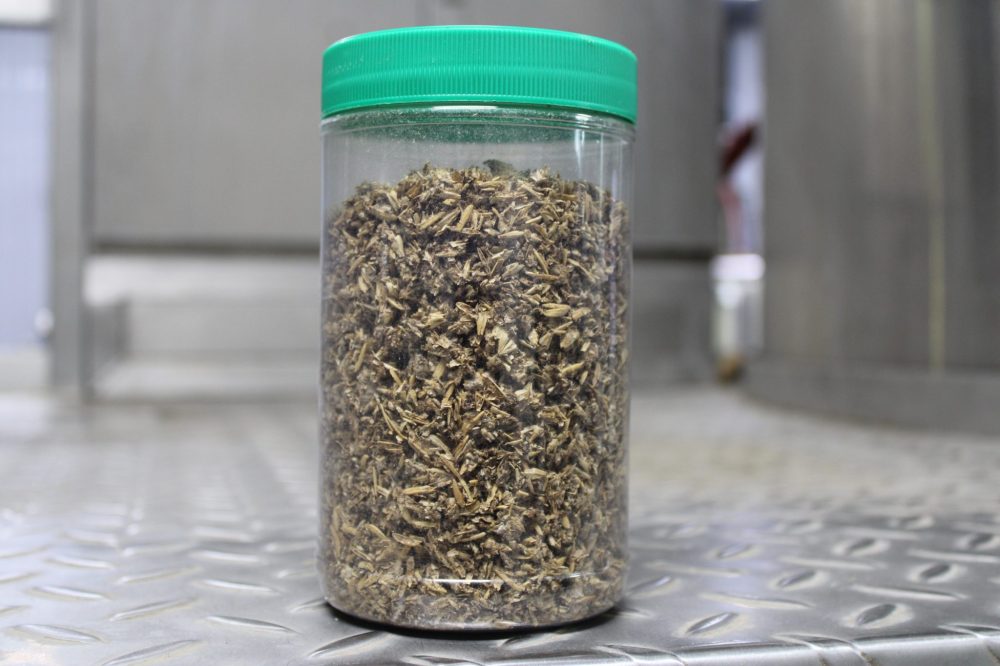
Two berry farms and a honey farm are located near their brewery and Olfert said they add the flavour they need to some of their brews.
Although he’s quick to deny he misses anything about the dairy business, upon reflection Olfert said he did miss the interactions with employees.
At one time he had up to nine high school or university students helping to milk his cows.
“I miss teaching them and having them work for me and seeing a lot of them excel from not liking or being scared of cows to becoming really good workers and loving cows,” he said.
He still gets his chance to meet with people but now he’s marketing his product, giving brewery tours or just talking about the industry.
“People would way rather talk about beer than milk,” he said. “For me, that’s kind of life-giving. We’ve been doing it for almost two years now and I haven’t got tired of telling our story yet.”
Olfert said they have no grand designs on becoming a large brewery but want to simply grow into the market.
“We want to make consistently good beer and just stick to our brand,” he said. “I think that’s important.”
For more information go to blumsteinbrewing.com.